
Abstract
This article examines risk, precarity, and safety within the technical and professional communication (TPC) academic job market. We unpack what constitutes implicit and explicit “success” and “failure” to guide graduate students preparing for primarily academic, as well as non-academic jobs within TPC. Our analysis of four different job seeking resources and follow-up discussion questions assist with equitable preparation across a breadth of careers. Through this, we question and respond to: What are the communal ways we experience and respond to risk and failure?
Keywords
Risk; Career preparation; Precarity; Graduate students
Introduction
Success on the job market may mean ideals such as a tenure-track job, a low teaching load, abundant resources for research, a position that allows you to be home with your family, or a job in a particular location. Success might also mean any faculty position, given their rarity. Audrey Williams June, writing in The Chronicle of Higher Education, stated that of nearly 22,000 Ph.D. recipients in 2022 who said they had accepted jobs in the United States, 32.5% took a position in academia, with nearly 50% taking roles in industry (alt-academic positions), and the remainder working in government, non-profits, or other sectors. June’s data from the Survey of Earned Doctorates tells a story we want to reshare: success is not necessarily defined by the area you fall into upon commencement.
However, most discussions of post-doctoral success are narrower, considering just the tenure-track job as the ideal measure of a “successful” doctoral program even if such a position does not align with each job seeker’s trajectory, desires, or goals. Tenure-track work—or tenure in general—remains the default marker of a successful higher education journey. More importantly, we find that most of the approaches and ideals outside of tenure-track work implicitly or explicitly stigmatize failure. Extending Paul Feigenbaum’s division of “generative” versus “stigmatized” failure, that is, we argue the process of seeking an academic job renders failure “a summative judgment that has harmful economic, cognitive, and health-related consequences for individuals deemed to have failed, or even to be at risk of failing” (14).
Idealized as it is, tenure-track positions neither end career risk nor remove stigmatized failure (Diascro; Marshall and Rothgeb). Similarly, many positions in industry or government are precarious or contingent on factors such as private funding, material goods, current financial cuts to higher education, or corporate decisions (such as physical location closures or corporate layoffs). Increasing attacks on funding affecting both academic departments and industries continue to shape our conversations about career-seeking and employment. Federal and state policies erode established tenure policies, constrain teaching practices and research, limit hiring initiatives, and subject faculty and staff to increased public scrutiny and surveillance. All this is to say: any career trajectory is laced with risk. No job is perfectly risk-free or safe.
As such, we argue graduate programs should define success and failure in different ways. Using Karen Tellez-Trujillo’s framing of success through feminist resiliency, we reframe tenure jobs as one of many career options for doctoral candidates and degree holders. Specifically, we argue graduate programs should frame going on the market and trying through Feigenbaum’s generative failure lens, where failure is a learning process and, even without an offer, is not necessarily a “failure.” Relatedly, we align with Jack Halberstam’s understanding that failure and risk-taking offer their own rewards: “Under certain circumstances failing, losing, forgetting, unmasking, undoing, unbecoming, not knowing may in fact offer more creative, more cooperative, more surprising ways of being in the world” (pp. 2–3). Failure is a form of meta-success. While there may be pain and discomfort associated with failure, new opportunities for learning and teaching are successes. As such, we define success as something contextual for each graduate student, informed by their goals, and impacted by their material realities and positionalities.
Our argument extends Morgan Banville et al.’s work on risk, precarity, and safety for TPC graduate students to draw from specific examples of instances where “success” has been presented to graduate students. This article offers a guide to fostering inclusivity by exploring financial precarity, career pressures, and mentorship opportunities (Chen et al.), and provides strategies based on our own experiences navigating professional roles to address how positionality, material realities, and power structures in academic environments (Walton et al.) shape—and are shaped by—the job market.
It is important to mention that each of the authors are currently in tenure-track roles, but each has taken different approaches to obtaining the position based on their backgrounds and positionalities. For example, Emily was in industry as a technical writer (alt-academic) before moving into a tenure-track role. Rachael was an adjunct, then lecturer, and then tenure-track. Elena was a lecturer for two years at one university and an adjunct at another before the tenure-track. And Morgan was a substitute teacher, and student taught K-12 prior to beginning her tenure-track role. Further, each of us has navigated the complexities with precarity due to gender, sexuality, disability, first-generation, financial status, parenting, and more. While we won’t discuss in explicit detail the complexities, these different paths and positionalities, as well as the work each author has undertaken in their professional and personal lives, emphasizes the need to think more broadly about what constitutes success and how people come by it.
To help graduate programs reimagine job market framing and to provide direct support to graduate students planning their careers, we offer an analysis of four resources that TPC graduate students may find particularly useful as they navigate the job market or that those teaching, advising, or otherwise mentoring graduate students should integrate into conversations about the job market. These resources challenge the success/failure binary and emphasize coalition building as a feminist act that is necessary for both guidance and reimagining diverse trajectories for graduate students.
The Failure-Success Argument
Some students are taught that failure is something we have to undergo in order to realize success. Wally Suphap notes that success “is often defined narrowly, to a set of standards and norms linked to capitalistic structures that valorize certain markers of success (e.g., publication bylines, social media followers, and book advances)” (3). Further, scholars have written about the precarity with specific positions such as adjuncts (Dubson; Stewart; Ashtari and Minet-Lucid), department closures (Gemson), leaving higher education institutions due to working conditions (Kottner), and more. Such narratives offer perspectives about what is “valued” within the neoliberal institution (hint: it isn’t us).
We would be remiss to not reference the scholars who have preceded our work and inform the approaches we take to arrive at conclusions and conduct our analysis. For example, Feigenbaum’s work has been broadly helpful in grounding ideas of failure despite their emphasis on undergraduate populations. Feigenbaum writes specifically about failure in writing: oftentimes, the so-called failure can lead to more success in the long-term. Specifically, Feigenbaum references stigmatized failure, categorized by “institutions of higher education yield[ing] emotionally and cognitively debilitating experiences of failure” (14). In our discussion of the higher education job market crisis, we find that institutions do perpetrate harm through lack of preparation, experiences in campus visits/interviews, and the overall process of the job market.
Relatedly, we want to highlight what is at stake in how success is defined in graduate education. When academia is positioned as the only meaningful marker of success, it privileges the academy in inequitable ways and obscures the lived realities of many graduate students. For some, geographic mobility is constrained by family responsibilities, personal safety, access to healthcare, or proximity to communities that share their identities and provide support. These structural constraints shape not only what opportunities are available to graduate students but also how success and failure are felt and interpreted. As Steven Corbett observes, conversations about failure often focus on its affective dimensions. Indeed, when success is narrowly defined, graduate students whose lives do not align with these expectations may experience their choices or circumstances as personal failure rather than reflections of institutional and structural conditions. While this article centers our experiences as graduate students, our analysis suggests that these affective experiences are not individual but collective, emerging across state and international contexts and deeply entangled with institutional pressures as well as broader cultural, economic, and social dynamics.
We also resonate greatly with the scholarship focused on the hyper-competitive and individualistic nature of the job market, and its subsequent successes or failures. As our analysis of four spaces used by job seekers throughout the academic job market reveals, the reality of the academic job market is that coalition-building and reliance on mentorship is a necessity. Yes, academic positions are individual, but the process of navigating the job market and applying to jobs—or even just determining what positions may be ideal for each candidate—can be processes of shared support and resource-building. Reframing such a high-stakes process in this way may encourage a view of failure as good and generative (Kapur; Beare) while still making space for the “wise interventions”—those which support “stigmatized individuals in their full humanity” (Yeager et al. 86)—that occur throughout the job market process. In the next section, we contribute to the “wise interventions” by job seekers throughout the academic job market through focusing on specific areas of networking and collaboration that we found helpful during the job market process.
Platform Analysis & Narrative as Methodology
As we have discussed, there are not nearly enough resources or models that address non–tenure-track and alt-academic career pathways. While our analysis focuses primarily on the academic job market, our goal in this article is to offer insight into overlapping concerns by examining how graduate students discuss success, failure, and risk in spaces where they seek support and information. Specifically, we analyze conversations that occur on online resource-sharing platforms, each of which function as informal infrastructures for job-market advice, affective support, and information exchange. Because these platforms are often perceived by users as semi-private and operate outside formal institutional oversight, they can provide lower-risk environments for candid discussion about the uncertainties of the job market.
This study was determined to be IRB-exempt. All information included here has been anonymized to protect participants and communities. We do not identify specific private conversations, servers, threads, or platforms from which examples are drawn. Any authors or publicly identifiable figures referenced are cited and named with permission.
Examining these platforms offers insight into how graduate students collectively make sense of success and failure in real time, including how advice circulates, how risks are interpreted, and how expectations about academic careers are reinforced or challenged. At the same time, this approach has limitations. Platform-based analysis captures the discourses that emerge in these spaces, but it cannot fully account for the intentions, identities, or experiences of individual participants, nor does it represent the full range of perspectives within graduate education. Other methods could provide additional insights into how individuals interpret and act on the advice they encounter. Our aim here is therefore not to provide a comprehensive account of job-market experiences but to highlight recurring themes within these environments.
The following four cases illustrate key patterns that emerge in these discussions and point to important concerns that institutions and mentors must address.
Example 1: From Private Server to Job Ad
The first space we focus on is a 2022 private server for graduate students, coordinated by an organization within the field of Rhetoric and Composition and consisted of materials that ranged from the typical job application content, to navigating campus visits, and other preparation as doctoral students. All the authors were participants. The focus of this example is not the language that was shared in the group, nor even the materials. Rather, it is what the server demonstrated: the need for mentorship for graduate students. The server also demonstrated a site where graduate students could experience and respond to the range of feelings associated with “success” and “failure” on the job market. This way of sharing experiences contributed to establishing a communal space where students in a similar position relied on each other for support by way of reviewing and giving feedback on materials, sharing job ads, crowdsourcing typical interview questions, and circulating additional information related to the academic job market.
Each person in the server’s group was searching for academic roles. From the internal messages, themes arose from the conversations such as:
- Commiseration;
- Breaking down job descriptions;
- Models of job market materials;
- Preparation for interviews and campus visits; and
- Responses to job rejections (both how to respond, as well as institutional responses).
As we wrote above, each author has brought accounts of successes and failures—especially fear of failure—to the table. Such fears led graduate students to seek support through the private server. One of the most common fears discussed was that of stability: there was a heightened level of anxiety due to the inability to know what job would be available, where students would be living, if they’d even have a job after graduation, what to expect during the campus visits, and additional specific concerns related to stability and positionality. For example, Morgan recalls discussing her initial reasons for wanting to apply to Ph.D. programs: stability. Stability is inherently tied to feelings (again, affect) of failure. For Morgan, as a first-generation college student, there was an assumption that was tied to tenure-track jobs; “if you receive a Ph.D., you get a tenure-track job, and then you’re secure for life.” Of course, this is a narrative that even those who are not first-generation college students or financially insecure face.
In this specific communal space, it seemed as though the fears did not disappear, but rather they changed. That is, when the group first began, fears were associated with misinterpreting the job descriptions or not doing well in an initial phone or video interview. Towards the time when the server’s participants were receiving job offers, these fears shifted into the unknowns unique to the new role: how to negotiate a job offer, what does a tenure-track position “look like” in the first year, how to count publications in the summer, and additional concerns and constraints. Fear is not a bad affect: rather, sharing fears helps to build community. The fears shared also serve as topical content for mentors to consider sharing with their own graduate students entering the job market: some universities have job groups, for example, where students are able to ask questions and prepare for academic roles. By discussing shared fears and concerns—with one another and trusted mentors—there is an opportunity to create materials to guide students’ anticipated worries. Such is an ethic of care.
Discussing fears of failure can also help destigmatize job market failures, shifting the experiences to one of generative learning, and graduate student discussions can help students reflect on whether antiquated markers of career excellence are right for them. In other words, destigmatizing failure by sharing fears can also help students embrace adequacy. Timothy Oleksiak and Joshua Barsczewski center “adequacy” as it “emerges as a form of agency – a goal for thriving by empowering ourselves to focus on the work we choose to do and to let other things go…adequacy is a possibility that lies outside of the continuum of success and failure” (p. 6). In this context, adequacy provides an alternative to the success/failure binary, which is often illusory for many academics because neoliberal standards of achievement remain structurally out of reach within conditions of austerity, contingency, overwork, and underpayment.
The themes are helpful to discuss, as administrators, faculty, and students, because of the ways that our current political climate has censored words (Connelly), cut institutional and grant funding (refer to Columbia and Harvard University, and NIH/NEH grants), and made the job market all the more precarious (risk of deportation; discrimination due to disability, gender, sexuality, and race; questions about how to “do” research on contentious topics, and much more). For example, one of the important takeaways from the server is the need to break down job descriptions. What is the job really asking for, and who are they really looking for? At the time of writing the first draft of this article, Morgan was about to be on an academic search committee for the first time as a faculty member (beginning in Fall 2025). Part of the concern as a member of the committee was how to create a job description in a climate where so much of the work we do in writing studies is “banned.” Such bans impact institutional funding, which impacts student recruitment and retention, which then impacts the very jobs we are seeking to open lines for. How do you navigate federal, state, and personal values? What is the balance between what is required, what language is being shifted, why, and so forth? How do you recruit the scholars you want to see succeed at your institution; while also navigating banned language, risk of the funding being pulled, and applicants’ concerns about being accepted and supported?
Adam Phillips analyzed the writing studies job market for early career scholar-teachers, finding that there were more Ph.D.’s being awarded than available full-time academic jobs. One of the conclusions that Phillips mentions is a focus on future research to “consider the specialized areas advertised in job ads (e.g., digital rhetoric, GAI, TPC, research methods) to inform early career scholars about marketable expertise.” As early-career scholars ourselves, and those who are/will be on search committees, this is an important consideration as we partake in crafting a job ad. As Phillips notes, through examining both hiring practices and required application materials, this approach may lead to more transparent and ethical recruitment (which we strive for!). Part of this transparency might just be something similar to the private server for graduate students that served to commiserate, network, and provide support (through modeling, questioning, and practicing). Perhaps a centralized repository of academic job documents, hiring practices, job market questions and answers, metrics about Ph.D.’s awarded (as Phillips suggests), and other academic-related information might be one way to combat the complexities of higher education, and the confusion associated with the lack of jobs available for the many deserving graduates.
Having mentors through the job market process, whether instructors or fellow students in similar roles, helps to cultivate feminist resilience through which graduate students themselves can help change the affective experience of job-searching by destigmatizing and celebrating failure through “maintaining and using communication networks,” as well as “cultivating human fragility” (refer to Buzzanell 43). Though the private server did not continue after the job market search was “over,” it may be beneficial for mentors to encourage graduate students to sustain such groups or networks through their careers. Such sustainability can be viewed as feminist resilience, and when such actions and processes are “guided by principles of care,” collective support can be seen as “serving socially and environmentally just ends” (Gregoratti, et al. 470). Many feminist interpretations of resilience are viewed as social and relational, characterized by “mutuality, togetherness, collaboration and care” (refer to Flynn, et al., as cited in Gregoratti, et al.). By creating the private server, the graduate students involved were actively engaging in principles of feminist resilience with the goal of creating a space for collective care.
Topics such as commiseration, academic job market materials, rejections and preparation, are only some of the conversations that we know many graduate students and mentors are having, yet it can be risky to have said conversations. Success and failure within higher education cannot be addressed without also including how positionality and privilege are impacted by geolocation, institutional ethics, politics, and funding. We also want to reiterate that academic jobs are not the only jobs graduate students are applying for. A private server is one example of a site where graduate students can share their experiences, including the feelings around applying for academic and alt-academic positions, and the high-stakes associated with the process. While graduate programs and professional organizations cannot do away with the inherent risk in applying for academic positions, they can assist students in preparing for the job market and connecting students with people in similar positions.
Example 2: Job Market Channels
The next space we focus on is a specific job market channel on a larger graduate student server for Technical and Professional Communication graduate students from universities across the United States and at a handful of international universities. This server was started by-and-for graduate students and offers a wide range of support and serves as a community to talk, connect, write, collaborate, and vent. The focus of this example are posts from both the 2023–2024 and the 2024–2025 job market cycles (from August 7, 2023, to December 18, 2024). Over two years, the posts can be broken down into the following categories:
- Job ads;
- Discussions about “targeted” searches;
- Sharing “contacts” or facilitating networking;
- Posting memes;
- Crowd-sourcing questions; and
- Job market outcomes.
Constraints
One important theme that emerged from these various posts was the constraints graduate students face when applying for academic jobs. Graduate students cited a range of reasons they were or were not applying for specific positions. For example, international students cited visa requirements that dictated their needs for certain types of academic employment. Others cited geographic limitations due to staying near family for support or childcare needs, worry over child custody agreements if needing to move out of state, the need to live in a state supportive of their gender identity or immigration status, and/or for the specific type of healthcare they needed. Other constraints cited in these posts involved work for spouses/partners, the worsening effects of climate change (e.g. hurricanes, tornadoes, and other natural disasters), and positions that would be a “step-up” from a current job. These varying constraints are a reminder to take students’ individual context into account when we are mentoring them on the job market and having discussions about their future “success.” For example, a non-tenure-track position in a state with family support and access to needed medical care may be referred to as a more “successful” job than a tenure-track position in an under-resourced state that is far away.
Networking
Another important aspect of the channel included posts where graduate students offered to put other students into contact with current professors at universities with job openings. Many graduate students’ network at conferences and on social media and, therefore, make connections that they are willing to share to support other graduate students on the job market. Since this particular channel includes students from multiple institutions, students also offered to put each other in connection with professors at their own institutions if their institution was hiring. There were also discussions about current/upcoming conferences and connecting people in-person with contacts at other universities. The networking facilitated on this channel goes against assumptions about job market candidates being ultra-competitive with one another because of job scarcity. However, at least in this community, the students wanted to see each other succeed and were willing to share resources, time, and connections so that everyone ended up in the best position for their specific circumstance.
Affective Responses
The space was also used to vent and share the affective responses to job searching. The use of memes in the channel was one way students shared feelings of collective worry, stress, and/or excitement and anticipation. For example, users shared memes of David from Schitt’s Creek with the dialogue line “I’m feeling this, like, deep aching sense of dread” (Figure 1) or one of a man holding a camera with the words “I’m half excited and half absolutely terrified.” Students also shared raw posts about how they were feeling while actively job searching. Students lamented how much more time-consuming the process was than they initially expected, joked about never wanting to write about themselves again, and shared frustrations with waiting to hear back from universities. Students also shared positive affective posts through luck, “good vibes” and other positive sentiments about their own, and others’, successes. Since all students in the larger server have access to the channel, students not on the job market posted words of encouragement and admiration. The space to share affective responses for a wide range of emotions in a non-institutional setting was a common theme in this space, highlighting the need for graduate students to have access to extra-institutional opportunities for connection and engagement.
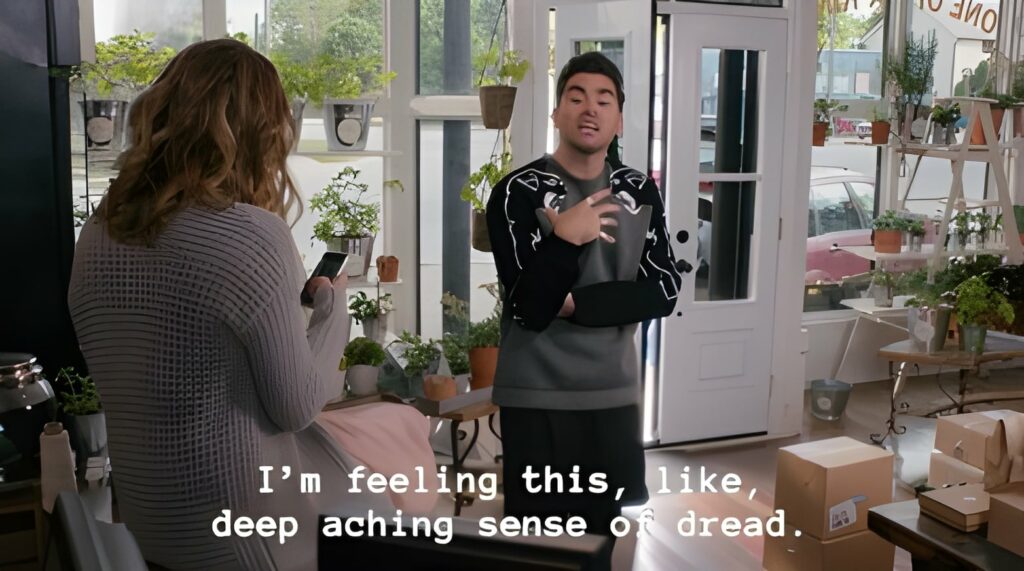
Figure 1. Example meme from the private server channel.
Horizontal Mentorship
The channel also became a space to get information and ask questions. Students asked for clarification on the differences between “teaching track,” “non-tenure track,” and “professor of practice.” Others asked for advice on teaching loads, such as the shock of one job ad with a 5-5 teaching load. Rachael, who was a full-time lecturer with that teaching load and a graduate student at the time, replied, “IT IS TOO MUCH.” Again, these conversations show a need for more graduate student mentoring when it comes to deciphering job ads and the need for job ads to be more explicit. These conversations also highlight the unique strengths that graduate students offer in mentoring one another. Through no fault of their own, some current faculty advisors and mentors have not been on the job market for over a decade (or more!) and don’t have experience with current job market realities. Having the space to ask questions among students currently experiencing the job market, with some on their second cycle, offers insights and information not always available from more traditional mentoring relationships.
Transparency
Something that occurred in the 2024–2025 cohort that was not present in the 2023–2024 cohort was that a handful of students were more open about the results of their job search. As students began to post fear of “failure” at many points in the process (from fear of not getting interviews to ultimately having a “failed search”), other students responded with how the job search was going for them. In response to one person’s concern that they weren’t qualified enough to be on the market, another student shared how they were “50/50” for job applications to interviews in the handful they had applied to so far. Students began to be more transparent about how the searches were actually going. However, posts stopped after December 18, 2024, right around when offer letters began to arrive from many universities. This abrupt stop to posts could be the result of many factors: students had accepted job offers, students had not gotten any offers, the market picked up so much it was hard to keep up with, or merely because most students’ semesters had ended. Whatever the reason, this stoppage points to how the communal aspects of this server began to fall apart when the outcome of job market searches became more concrete. The community valued transparency around the job market process that ultimately did not extend to job market outcomes, showing how complicated facing “success/failure” within a community can be.
Extra-Institutional Support & Communication
Overall, this channel made clear that graduate students on the job market need spaces to discuss failure, fears of failure, share resources, share successes, and vent about the job market process. Not only do graduate students need institutional mentorship through their dissertation advisors, committees, and other faculty, but a space for informal mentorship and community-building outside of the institution is important as well. With this graduate student only space, spread out across different institutions, students were more readily able to share affective responses to the job market, joke with one another, vent, and support each other through a confusing, challenging, and stressful time. However, the channel also made apparent how support networks need to continue beyond the job market itself as graduate students transition into new roles and navigate the loss of groups associated with their graduate student identities.
Example 3: Academic Jobs Wiki
The Academic Jobs Wiki (AJW) offers another case example in how knowledge-sharing practices can subvert dominant narratives of success in the academic job market. Hosted on Fandom.com, AJW includes editable wiki pages for a range of academic disciplines, including Rhetoric/Composition and Communication and Media Studies. These pages list job postings for each academic year alongside key metadata such as institutional affiliation, application deadlines, job type (e.g., tenure track, non-tenure track, visiting, or postdoc), and user-generated updates on the status of each search. Though it operates without user accounts, pseudonyms, or formal moderation, AJW cultivates a robust and organized archive of information through the collective labor of job seekers. This labor performs an important rhetorical and pedagogical function: it demystifies the job market by rendering visible what is typically obscure or obfuscated.
Despite—or perhaps because of—its informality, AJW resists the hierarchies that are often reinforced through institutionally-sanctioned career resources. While most university career offices or disciplinary professional organizations spotlight only the most “prestigious” or “competitive” roles, AJW’s structure does not privilege one kind of job over another. It tracks community college postings alongside Ivy League tenure-track searches. It notes VAP (Visiting Assistant Professor) positions, fellowships, and lecturer jobs with equal diligence. This broad scope signals to users that a job is a job, and every opportunity deserves attention and updates. As a rhetorical space, AJW refuses shame-based hierarchies around what kind of academic labor counts and instead creates a broader record of professional opportunities. In doing so, it helps graduate students reframe success through plural outcomes rather than a singular pipeline.
What’s critical about AJW is not just the volume of information, but the type of interactions it facilitates. Because contributors post anonymously, the site cultivates a kind of collective vulnerability that would be impossible in more formal settings. The section known as “Word on the Street”—a space for informal updates, rumors, and experiences—often includes affectively-charged disclosures that help normalize the emotional toll of the job search. One user posted, “I’m starting to feel like no news is bad news for me 3/3,” to which another replied, “If it’s any consolation, I’m in the same spot 3/3.” These small exchanges, while seemingly incidental, illustrate a deeper structure of mutual recognition and support. They form a digital micro-community of people who may never meet but are nonetheless bound together by the disorienting experience of seeking stable employment in a structurally unstable environment.
The site also functions as an emergent knowledge base, offering timely updates and crowdsourced clarity around confusing situations. For example, on March 10th, 2025, one user asked, “I just saw a post for Curry again. Does anyone know if this search failed or if they are hiring more than one or what’s up?” Others quickly responded with firsthand accounts: “I’m not sure—I heard nothing after my zoom interview and assumed they found someone,” and another followed up on March 17th, adding, “I reached out to them about this! I’m not sure why it was posted again, but they said the search is now closed.” In this way, the AJW becomes not just a bulletin board but a space of real-time collaborative troubleshooting. The knowledge shared there is dialogic, contingent, and constantly evolving, offering an antidote to the formality and opacity of institutional communication while on the academic job market.
These knowledge and support-sharing resources are especially critical amid the political and economic instability shaping today’s academic labor market. The announcement on April 30, 2025, that Harvard University would not be hiring preceptors for the 2025–2026 academic year due to a university-wide hiring freeze underscores the volatility job seekers now face, even at institutions typically considered stable or well-resourced. One post to AJW quoted the official message sent to applicants: “Dear Preceptor Candidate – Thank you for your application… At this time, due to Harvard University’s current hiring pause, we are unable to hire any preceptors for the 2025–26 academic year.” The notice, while courteous, speaks to a deeper systemic uncertainty, where even applicants who follow every procedural step and submit competitive materials can be derailed by shifting budgets, institutional priorities, and federal and state policies. This instability is especially stressful for multiply-marginalized graduate students, who often face additional barriers related to geography, healthcare access, caregiving responsibilities, visa status, and institutional belonging. In this climate, job seekers need real-time, peer-generated information to make sense of changing conditions and to emotionally process the amplified stressors of the job search process, and AJW, as well as other resources we discuss here, helps to provide that infrastructure. It offers not only a form of tactical technical communication (Kimball) as candidates continue their job search (e.g., which searches are still active, which have frozen), but also a platform for collective processing, reminding graduate students that these failures are systemic, not personal. Resources like AJW help reframe the narrative: it’s not that candidates aren’t good enough, it’s that the system itself is unstable, and solidarity and transparency are the best tools available to navigate it.
At the same time, AJW has several notable limitations. AJW lacks a distinct page for academic jobs in technical and professional communication (TPC), despite TPC’s status as a growing and distinct field with unique job titles, application expectations, and pedagogical emphases, leaving many candidates to search across multiple less-specific pages to find relevant listings. Additionally, because the site relies entirely on voluntary, crowdsourced labor, its coverage is uneven across disciplines, institutions, and job types. Some sections are meticulously updated with interview timelines and offer reports, while others remain blank or outdated. Crucial information about labor expectations and salary is often missing, despite the availability of a linked page for salary and other details of the offer package. This is often because institutions do not disclose it or because contributors are unaware or hesitant to share. As a result, AJW’s promise of transparency is contingent, shaped by the bandwidth and generosity of its user base. These gaps do not negate the platform’s value, but they highlight the structural precarity of relying on unpaid collective labor to fill the void left by opaque institutional systems.
Example 4: The Shift to Social Media
A fourth area offering a space for study are social media channels. However, these channels, such as X (formerly known as Twitter) or BlueSky, have proven one of the more challenging places in technical and professional communication for the job market. Prior to Elon Musk’s purchase of X, then-Twitter, had a well-established community of both personal and professional accounts from TPC users. It was relatively easy to find an account from a school, a professional organization, a workplace, or a fellow scholar and connect with them through (re)tweets. Broad-reaching hashtags such as #academictwitter, #academicchatter, #firstgen, and #PhDChat brought communities together on X, creating wide networks to connect with other scholars and professionals. In a narrower focus, hashtags like #teamrhetoric, #rhetorictwitter, and #rhetkindness brought the rhetoric and technical communication community closer and created networks over time.
Since Musk’s privatization and takeover of Twitter in 2022, the climate on X shifted into a deep bipartisan split, with the site spilling towards conservative politics, voices, and experiences (McClain et al). As we see it, the ownership changes in X and overall change in privacy, politics, and online climate led to two simultaneous events: an exodus of users to new platforms (and a subsequent loss of connection), and a magnified view of how social media can create risk for job seekers.
First: many technical and professional academics and organizations transitioned away from X and onto platforms such as BlueSky, Mastodon, or back to the long-standing LinkedIn. Focusing on BlueSky in particular, the company appeared to be the frontrunner for X’s replacement, with over 35 million users on the platform as of May 2025 (Cooper). At the time of writing, we observed that TPC scholars and industry professionals seemed to favor BlueSky, with organizations such as the Association for Computing Machinery’s Special Interest Group for Design of Communication (ACM-SIGDOC) recently moving to the platform following a survey of community members citing reasons such as privacy, politics, and profits as a reason to leave X (Banville). BlueSky touts customizable feeds, starter packs (which are curated user lists), easy-to-report mis/disinformation features, and open-source framework with ad-free features (Silberling et al). The transparency and user-centered design have been applauded as a risk-reducing, ethical replacement to X’s privatization and fascist-learning algorithm.
To briefly illustrate BlueSky’s networking capabilities, we entered in two broad search terms: alt-ac market and academic job market. [1] Someone in the early stages of a job search—or new to a job search—may enter in these terms when starting their search. These keywords yielded two different results. When looking at the “All Results” tab in BlueSky for the alt-ac market in all languages, we found that results were very sparse; the latest results dated back to April 2025, were spotty through early 2025, and went back into 2024 with inconsistent posts. However, the search for an academic job market yielded a much higher and more consistent set of posts, with users posting every few days. This skim-search demonstrated, very briefly, that BlueSky can be a difficult place to network. It can be seen as too niche, and many users to date find it difficult to reconnect and find community in the same way that X had pre-Musk takeover. This could be due in part to algorithmic challenges, or simply due to its newness: X has been around since 2006, and BlueSky started as a research initiative in 2019 inside Twitter, before breaking out in 2022 with a subsequent public app launch in 2024.
Another important item of note here is that these posts were not nearly as frequent or rapid-fire as what an X user might find: sometimes on Bluesky, as is the case with the alt-ac search, it could be months in-between a post on the alt-ac search result. The same search on X for either term may yield more results, [2] simply due to the number of users. As such, many users and platforms remain on X. In the technical and professional communication space, many still have a presence on X (such as NCTE’s 4C’s account, or the X account for Computers and Writing), but remain quiet or unused (such as CPTSC’s GSC twitter). Some have dual-listed accounts with X and Bluesky (the journal Technical Communication and Social Justice, for one, actively posts on both feeds). Thousands of industry organizations and universities maintain their X accounts, likely for marketing and archival purposes: with potentially 18-plus years of tweets for some of these organizations, it’s hard to part ways with a social network that proved useful and abundant for users and organizations.
Even so, the intensified politics of a platform such as X have created a magnified view of how social media in 2025 and beyond can create risk for job seekers. With many job-seekers leaving built-up networks and going to open-source networks, one critical point arises: what does privacy and protection look like for job seekers in the age of social media? For example, at the time of writing this article, one criticism of BlueSky was the lack of private or protected timeline views, which X does offer. Some job seekers, particularly international or queer applicants, prefer to keep their timelines protected in order to mitigate discrimination over personal and political views. However, if someone on the job market has a “more ethical” social media service like BlueSky, the applicant must either accept the fact their entire timeline is public, have separate accounts for personal and professional use, or not have a presence online at all, which could be perceived as a risk in and of itself. Or, they could remain on X (or another platform) with a privatized account, and face the privacy policies of an increasingly hostile, right-leaning platform which could cause further harm.
Discussion Questions
Based on the themes and narratives we collected, we believe that a list of discussion questions is helpful to guide faculty, staff, administrators, and graduate students in navigating the complexities of the job market (both academic and non-academic). We find that such questioning allows for flexibility based on positionality and location, and any practical advice would only be of use context dependent. Overall, there is an inherent toxicity built into the system of the academic job market, and we seek to address and combat the “success” and “failure” binary by engaging and creating collaborative efforts. We can ask ourselves these questions individually, or in groups. While feminist resilience is communal, relational, and social (Tellez-Trujillo quoting Flynn et al. 128), and we forward a model of communal mentorship and resilience, these questions can begin as individual ideas that eventually merge within a community space. They may also be built into communal discussion from the start. We therefore brainstormed the following questions for instructors working on their own or in groups:
- Given your/our current institutional context and position, how do you/we envision discussing futures, failure, and success with graduate students?
- How can instructors subvert and resist institutional pressures, especially in the ways language and career paths are “normed”?
- What resources and insights can you offer for job seekers that prioritize flexibility, collaboration, and transparency?
We then brainstormed questions for graduate students to ask themselves, as self-reflection or within groups: [3]
- Putting aside other (people’s, institutions’, your program’s) expectations, what would be the “perfect” position for you?
- What would factors like location, institution, teaching load, research expectations, and salary look like?
- Would you want to focus more on teaching, research, or administration work? Consider writing your “perfect” job description and seeing what’s out there – or close to it.
- Who else (if anyone) impacts your decision on the positions you’ll apply for and how do you plan on keeping them involved?
- What supports do you have/will you put into place during the job market season?
The following is a list of helpful resources that we have compiled to assist graduate students, faculty, and administrators with preparing for the academic job market, including some careful considerations:
- Adam Phillips, Charting the Currents: A Deep Dive into the Writing Studies Job Market for Early Career Scholar-Teachers (Composition Forum, Spring 2025)
- rhet map
- Doctoral programs in Rhetoric and Composition
- Rhetoric, Composition & TPC Job Dashboard
- Rhetoric/Composition 2024-2025 | Academic Jobs Wiki
- Discord Servers: Rhetorical Soup; CPTSC-GSC; CPTSC GSC Alumni; Resources and Accountability Pod
- Dropbox for CPTSC-GSC
At the end of their piece on doctoral student identity in Technical and Professional Communication, Keith Grant-Davie et al. remind us to “make a habit of asking the fundamental, existential questions, ‘Who am I?’ ‘What do I do?’ and ‘Where, how, and why do I do it?’” (168). Though they focus on research and scholarly identity, these same questions are useful as graduate students enter the job market, and their answers can help contextualize what success might mean for each of us. These are also worthy questions to ask ourselves and each other throughout our careers whether on the job market, starting new positions, making career changes (forced or voluntary), and supporting others with their own goals. Recently, our field has put a much-needed emphasis on supporting graduate students, and their diverse positionalities and experiences, in our programs and classrooms. This same consideration and care must also extend to the job market and early-career support, especially the ways we frame “success.”
Notes
[1] The search terms used for this paper were https://bsky.app/search?q=alt-ac+market and https://bsky.app/search?q=academic+job+market.
[2] At the time of this paper’s creation, we found that a similar search term to https://bsky.app/search?q=alt-ac+market on X, https://x.com/search?q=alt-ac%20market&src=typed_query&f=live, yielded two results: one that gives tweets as recent as November 2024, and the other showing Bitcoin and cryptocurrency markets. These results may imply that X’s algorithm automatically shifts users searching for “market” into cryptocurrency results, and the alt-academic keyword is declining in use since late 2024.
[3] We would also like to create questions for search committees, but much of what members can do and say is constrained by the institution.
Works Cited
Ashtari, Nooshan, and Pamela Minet-Lucid. Unheard Voices and Unseen Faces: The Experience of Adjuncts. Dorfeld, pp. 87–94. https://doi.org/10.37514/PRA-B.2022.1589.2.09.
Banville, Morgan, et al. Identity, Agency, and Precarity: Considerations of Graduate Students in Technical Communication. Programmatic Perspectives, vol. 12, no. 2, 2021, pp. 76–96.
Banville, Morgan. Deleting X: Why SIGDOC Left the Platform. Communications of the ACM, vol. 68, no. 9, Aug. 2025, pp. 9–10. https://doi.org/10.1145/3743155.
Beare, Zachary. The Strange Practices of Serendipitous Failure: Considering Metanoia as an Alternative to Kairos. Serendipity in Rhetoric, Writing, and Literacy Research, edited by Maureen Daly Goggin and Peter N. Goggin, Utah State University Press, 2018, pp. 257–66.
Buzzanell, Patrice M. Designing Feminist Resilience. Reflections on Feminist Communication and Media Scholarship, edited by Stine Eckert and Ingrid Bachmann, Routledge, 2021, pp. 43–58. https://doi.org/10.4324/9781003102786-3.
Chen, Chen, et al. Interrogating the Four Ps: Positionality, Privilege, Power, and Professionalism in the Rhetoric and Composition Job Market. Composition Studies, vol. 50, no. 3, 2022, pp. 20–39. https://compstudiesjournal.com/wp-content/uploads/2023/03/chen-etal.pdf.
Connelly, Eileen A. J. Federal Government’s Growing Banned Words List Is Chilling Act of Censorship. PEN America, 22 Dec. 2025, https://pen.org/banned-words-list/.
Cooper, Gael. “‘Twitter Quitters’ Flock to Bluesky, Which Now Has 35 Million Users.” CNET, 6 May 2025, https://www.cnet.com/tech/how-to-join-bluesky-which-now-has-35-million-users-as-a-twitter-alternative/.
Corbett, Steven J. “Introduction. Choice, Control, and Performance: Writing Studies and the Rhetoric of Failure.” If at First You Don’t Succeed? Writing, Rhetoric, and the Question of Failure, edited by Steven J. Corbett, The WAC Clearinghouse; University Press of Colorado, 2024, pp. 3–17. https://doi.org/10.37514/PER-B.2024.2494.1.3.
Dorfeld, Natalie M., editor. The Invisible Professor: The Precarious Lives of the New Faculty Majority. The WAC Clearinghouse; University Press of Colorado, 2022.
Dubson, Michael. The Shadow of the Adjunct. Dorfeld, pp. 15–21. https://doi.org/10.37514/PRA-B.2022.1589.2.01.
Feigenbaum, Paul. Telling Students It’s OK to Fail, but Showing Them It Isn’t: Dissonant Paradigms of Failure in Higher Education. Teaching and Learning Inquiry, vol. 9, no. 1, 2021, pp. 13–26.
Flynn, Elizabeth A., et al. Introduction: Feminist Rhetorical Resilience – Possibilities and Impossibilities. Feminist Rhetorical Resilience, edited by Elizabeth A. Flynn et al., University Press of Colorado, 2012, pp. 1–29.
Gemson, Constance H. Closing of My College Department and Swingline Factory. Dorfeld, pp. 51–57. https://doi.org/10.37514/PRA-B.2022.1589.2.05.
Grant-Davie, Keith, et al. Helping Doctoral Students Establish Long-Term Identities as Technical Communication Scholars. Journal of Technical Writing and Communication, vol. 47, no. 2, Apr. 2017, pp. 151–71. https://doi.org/10.1177/0047281617692071.
Gregoratti, Catia, et al. Resilience: Why Should We Think with Care? Global Social Challenges Journal, vol. 3, no. 3, Dec. 2024, pp. 470–78. https://doi.org/10.1332/27523349Y2024D000000033.
Halberstam, Judith. The Queer Art of Failure. Duke University Press, 2011.
June, Audrey Williams. This Is Where New Ph.D.s Find Jobs. The Chronicle of Higher Education, 2 Feb. 2024, https://www.chronicle.com/article/this-is-where-new-ph-d-s-find-jobs.
Kapur, Manu. Learning from Productive Failure. Learning: Research and Practice, vol. 1, no. 1, Jan. 2015, pp. 51–65. https://doi.org/10.1080/23735082.2015.1002195.
Kimball, Miles A. Tactical Technical Communication. Technical Communication Quarterly, vol. 26, no. 1, Jan. 2017, pp. 1–7. https://doi.org/10.1080/10572252.2017.1259428.
Kottner, Lee. Breaking Up with Higher Ed. Dorfeld, pp. 171–80. https://doi.org/10.37514/PRA-B.2022.1589.2.18.
McClain, Colleen, et al. “2. How X Users View, Experience the Platform.” Pew Research Center, 12 June 2024, https://www.pewresearch.org/internet/2024/06/12/how-x-users-view-experience-the-platform/.
Oleksiak, Timothy, and Joshua Barsczewski. Adequate: Rewriting the Logics of Success in Rhetoric and Composition. University Press of Colorado, 2026.
Phillips, Adam. Charting the Currents: A Deep Dive into the Writing Studies Job Market for Early Career Scholar-Teachers Composition Forum, vol. 55, Spring 2025, https://compositionforum.com/issue/55/charting-the-currents/.
Silberling, Amanda, et al. What Is Bluesky? Everything to Know about the X Competitor. TechCrunch, 23 Sept. 2025, https://techcrunch.com/2025/09/23/what-is-bluesky-everything-to-know-about-the-x-competitor/.
Stewart, Marjorie. Adjunctivitis: The Plague of Academia. Dorfeld, pp. 41–49. https://doi.org/10.37514/PRA-B.2022.1589.2.04.
Suphap, Wally. Workshopping Failure Pedagogy for Creative Writing Studies. New Writing, vol. 20, no. 2, Apr. 2023, pp. 244–58. https://doi.org/10.1080/14790726.2022.2106246.
Tellez-Trujillo, Karen R. Recognizing Feminist Resilience Rather Than Seeking Success in Response to Failure. If at First You Don’t Succeed? Writing, Rhetoric, and the Question of Failure, edited by Steven J. Corbett, The WAC Clearinghouse; University Press of Colorado, 2024, pp. 125–36. https://doi.org/10.37514/PER-B.2024.2494.2.06.
Walton, Rebecca, et al. Technical Communication After the Social Justice Turn: Building Coalitions for Action. Routledge, 2019.
Yeager, David Scott, et al. Breaking the Cycle of Mistrust: Wise Interventions to Provide Critical Feedback across the Racial Divide. Journal of Experimental Psychology: General, vol. 143, no. 2, 2014, pp. 804–24. https://doi.org/10.1037/a0033906.