
Ira Shor taught for over forty years at CUNY Staten Island and the CUNY Graduate Center. Well-known for his experiments with critical pedagogy, Shor has authored several books, including When Students Have Power: Negotiating Authority in a Critical Pedagogy, Critical Teaching and Everyday Life, and A Pedagogy for Liberation: Dialogues on Transforming Education, which was co-written with Paulo Freire.
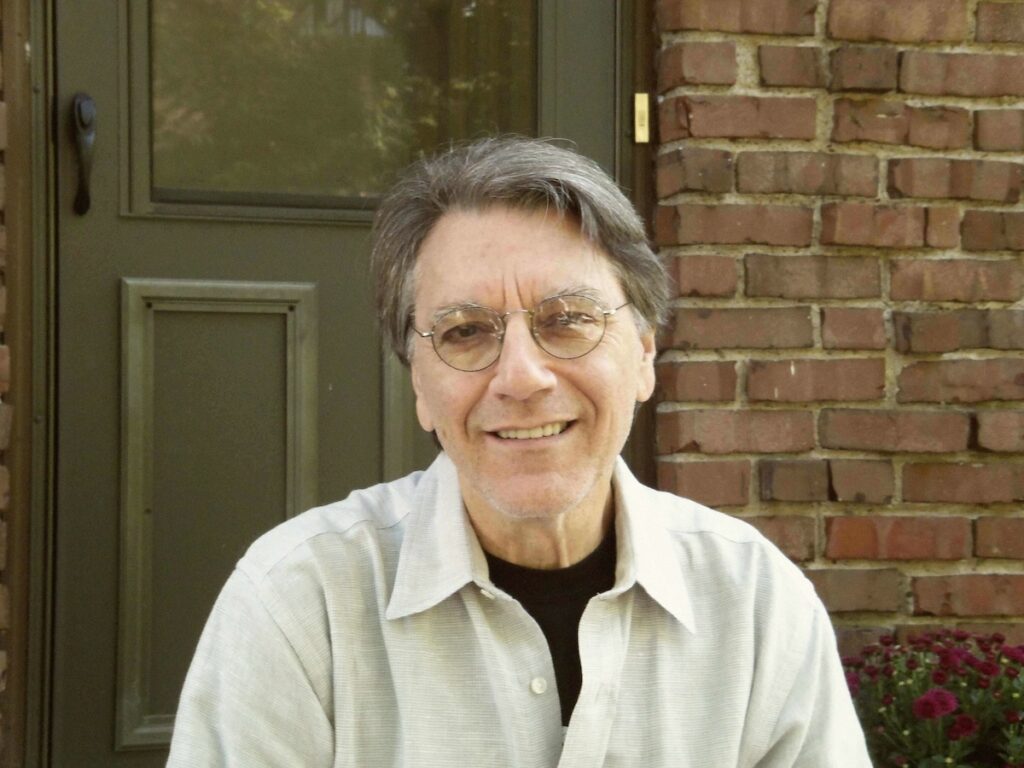
I spoke with Shor in the summer of 2024, soon after the publication of Is College Worth It? Class and the Myth of the College Premium, a book he co-authored with Richard Ohmann. In this interview, we discuss the collaboration between Shor and Ohmann, which began after Ohmann became ill. Shor finished editing and writing the book after Ohmann’s death in October 2021. The book critically examines the financial value of higher education by analyzing how race, class, and gender impact educational access and lifetime earnings. Ohmann and Shor’s findings question the commonly held beliefs of higher education as a great equalizer.
While our discussion of the book looks at higher education from a macro level, Shor brings nearly every topic back to the college writing classroom. At several points in our discussion, Shor notes that the classroom “cannot be defended from the inside.” That is, the struggle over the conditions of our teaching and of students’ learning will have to be waged through movements outside the classroom. But this doesn’t mean that the classroom is a depoliticized space, captured by the interests of markets and business-minded university administrators. Shor has hope in the possibilities of a classroom that begins with the pressing questions of everyday life and deepens them into a critical analysis of power relations in society.
Ben: You co-authored Is College Worth It? with Richard Ohmann, who died in 2021. Your preface, titled “‘Beauty of an Implied Collaboration,’ or How Dick Ohmann and I Made This Book,” tells the story of how the book came together. I wonder if we could start there, talking about your connection with Richard Ohmann and how you came to co-author the book.
Ira: Yes, well, there was no plan to do this together. As I write in the book’s opening chapter, friends of Dick were planning a big Zoom meeting to sing happy birthday for his 90th in July 2021. When I logged on that morning, I was startled to read that he had been rushed to the hospital. Later, Dick sent an email telling us the diagnosis—a deep incurable infection in his heart. He decided to go into hospice at his farm in Western Massachusetts. He invited folks to visit him there.
The very next weekend, my wife and I drove up. He was in a wheelchair, attended by a hospice aide and his daughter Sarah. Told in advance by Sarah that Dick’s hospice carried no food restrictions, I had brought Italian pastry. Sarah made us coffee, and we talked politics as we ate. I asked him about his work, and he said he was in the midst of a new book. But he added that, sadly, he wouldn’t be able to finish it. His sadness was very moving. It touched me deeply.
To break the sadness, I asked him to tell me about the unfinished book. He began speaking for a short while and then suddenly blurted out: “Would you like to finish it for me?” That was such a surprise. I said awkwardly: “Well, it’s possible, but can I have a look at the chapters first?” We then chatted further about the book until he grew tired. We said our goodbyes and left.
The week after, he emailed the draft of five chapters. Dick asked in the email if I would “curate” them, which I took to mean refining them up to be ready for publication, filling in gaps, adding missing items.
I read the chapters, made notes on various changes I’d suggest and emailed him my thoughts. He liked my suggestions, and just like that we began collaborating. He especially urged me to raise the profile of class, gender, and ideology in the book wherever I thought it was needed. Most importantly, he had never drafted a concluding chapter. He wanted me to compose that from beginning to end in my own voice. So, I began work. It was a race against time because time was sadly running out for him. He was very ill as I went through the manuscript, page by page, line by line.
When I read something that I thought needed curating, I would write notes and then send him an email with the chapter and page for my proposed changes. He emailed me back accepting most of my changes. In August, I visited him a second time for a face-to-face talk on the changes. Back home, I worked daily, emailing Dick about my suggestions and progress. But his responses to me slowed down by the end of September. He was weakening, so I dropped everything to work on the chapters.
In early October, the bad news arrived. An email from his daughter Sarah told me that Dick had died that morning. I felt very sad. I was grieving for some days, but I still had a concluding chapter to finish. As it happened, the last time I went to visit him in August, he handed me a banker’s box full of sources for the unwritten chapter six, the conclusion. I read the box item by item and wrote as I studied the sources Dick had left behind.
Dick had a beautiful composing style, analytic but plainspoken, avoiding academic jargon, no interminable sentences burying meaning in over-qualification. Writing as if he was thinking aloud. When I read his work, it was like I was sitting across from him, and he was saying: “Let’s try this thought experiment. And let’s suppose that we think of all this data this way and that way and how does it change how things shape up?” It was a discursive thought process legibly articulated as a learning process in writing, displaying how he made sense of the material.
His legible academic style is a beautiful lesson for writers, to think aloud in the composed text, to challenge our understandings with thought experiments written into a transparent text. To do this, Dick posed subject matter and data as thought problems examined from several perspectives each of which he plainly acknowledged as a lens we are looking through. Perhaps most important, he foregrounded the power relations embedded in any subject matter or data, treating texts or data as never neutral or apolitical but rather as situated in consequential social contexts. Because power relations are pervasive and dominant in every society, all data tell a story located in time, space, and politics. This is part of Dick Ohmann’s genius, to write out the stories in the numbers and then to articulate the politics in the stories.
In this regard, Dick’s style was exemplary for critical scholars. He and I agreed that ideology pervaded culture, education, and everyday life. Dick said that he and I were “working with the same problematic.” The problematic was critical university studies, but we worked from different locations: I from mass higher education at a low-budget public college, he at a well-regarded private university.
Ben: In the book you tell the story of how you and Richard Ohmann met and how he influenced your work as a teacher and scholar. I wonder if you could share some of that.
Ira: Fifty-plus years ago, I met him at the Modern Language Association meetings in the late sixties. In ‘68 and ’69, there were very raucous meetings where the Radical Caucus of the MLA, of which he was one of the leaders, disrupted business as usual to raise critical questions about the war in Vietnam, about racism, and about the way the field studies literature. That’s where I met him, Louis Kampf, Florence Howe, Paul Lauter, and Adrienne Rich, among other luminaries. I went to a talk that Dick Ohmann gave at the ’68 MLA. I was 23 and startled to hear a professor speak of radical ideas with such grace and eloquence, poise and confidence. He had a wonderfully persuasive style of speaking, urging other faculty to join the mass movements of the time against racism and the war. I thought, well this is somebody I really have to know and learn from.
After MLA, I wrote to him and sent an essay because he was editor of College English from 1966 to 1978. That was a very important position for him because he was able to publish oppositional work in literary criticism and in composition-rhetoric.
The essay I sent him wasn’t very good, and he rejected it. But his rejection letter was kind and helpful. I felt no offense and he encouraged me to send more material to him.
So, I put that essay aside and began studying and writing about my teaching. Obviously, my three degrees from Michigan and Wisconsin had not prepared me to be a writing teacher for working-class students at a three-penny public college. I grew up in the working class and spoke Bronx-accented non-standard English when I left home at seventeen. But after eight years at two elite universities, I now spoke in academic discourse, a dialect alien to the students at Staten Island Community College. I felt disoriented and ineffective in class, as if I was put in a space capsule and sent to Mars with the wrong playbook on what to do when I got there. I was over-educated, miseducated, and undereducated at the same time.
It baffled me. Nothing was working. I said to myself, something is very wrong here. So, I began a self-designed post-doc in teaching, language learning, comp-rhet, and mass schooling in society, and I acquired a new home library of texts. I began experimenting in the writing class, listening carefully to when and what students said in and out of class, as well as how I was speaking. I conceptualized my initial goal: to invite students to extra-ordinarily re-experience the ordinary.
I said to myself, “I too grew up in the working class and had no political consciousness when I went off to college.” So, to start, I studied myself to see what I did when I thought, spoke, or acted critically. My ways of seeing, doing, and speaking had changed radically from what they were. I developed the earliest critical teaching process from here, recorded in my first book, Critical Teaching and Everyday Life.
As I experimented then, I sent Dick essays about my teaching. The concrete social contexts reported in this work appealed to him. I was trying to find an oppositional practice in a distinctly mass institution, recognizing social class and other power relations in my two-year college setting. What is possible in a college classroom where students have had the worst prior formal educations, bored by the standard curriculum and silenced by teacher-talk? Their school years have left them disliking classrooms, teachers, and intellectual work.
From this starting point, I tested writing activities that posed ordinary, familiar subjects as extraordinary problems. Dick liked some writing I sent him on this pedagogy-in-process. Once, he called to say he was putting together an issue of College English and could use an essay from a place like I was in, a community college.
As a mentor, then, he played a key role at a moment when I was starting out. His support boosted my morale to work through problems and mature into an oppositional teaching practice.
Young people need mentors supporting their work. Older colleagues can help the young find their places. I was fortunate to have Dick play that role. And then I was doubly fortunate because in the next decade, I started working with Paulo Freire. A friend and fellow teacher at my community college said to me, “What you’re doing is like what Paulo Freire wanted to do in Brazil.” Up to then, I had never heard of Freire. My friend gave me a copy of Pedagogy of the Oppressed. I studied that book and was drawn to Freire’s other work. Freire, like Ohmann, was an older scholar-teacher-activist interested in oppositional pedagogy. Freire’s particular attention to literacy and teaching was especially useful as I experimented in my writing classes.
I began reinventing Freire’s problem-posing, dialogic pedagogy for my situation. That is, Freire taught illiterate adult workers and peasants in impoverished third-world communities outside formal schooling; I taught basic writing and first-year comp to working-class college students in a formal community college. My students, after years of language instruction in formal schools, could only poorly read and write, products as they were of schools in the richest, most powerful nation in the world. Like all who teach for critical literacy, I had to situate my practice in the material conditions of the place, time, and students. This is why there is no standardized critical pedagogy, no one syllabus or method that works anywhere, but rather practitioners report episodes of critical teaching and learning in their various situations.
As it happened, a colleague at a Midwest community college handed Paulo Freire a copy of my first book, Critical Teaching, when she attended a talk he gave there in the early 1980s. Freire sent me a letter praising the book and asked to meet the next time he was in the States. When he came to Amherst to speak at the University there in 1983, he called and invited me to join him. So, my first good fortune was to have Dick Ohmann as an early mentor, followed by the next good fortune to have Paulo Freire as mentor, collaborator, and friend until he sadly passed in 1997.
Ben: I want to ask a question to get to a central part of Is College Worth It? A lot of the book responds to a claim, based on the 2002 Economic Census, that college graduates make one million dollars more in lifetime earnings than high school graduates. This has been dubbed “the college premium.” The book critiques the conventional wisdom that links those earnings to a college education, calling it a myth. So what is the myth of the college premium?
Ira: If we want to figure out “the return on investment in college,” which is the formal economic name of the college premium, we must look at who goes to which colleges, who drops out of college, who graduates with what degree, and how graduates fare in the job market after college. Dick organized the book to dispute the million-dollar myth by showing data on how unequally college functions in an unequal society like ours. Many go to college. Many graduate, but many drop out. Graduates and dropouts alike often leave college deeply in debt. Many find the job market for college grads weak and their degrees not rewarded with suitable wages, which makes paying off debt slow and burdensome through their young adulthood. Then again, many never go to college. The weak college job market and the modest wages paid to graduates are two big holes in the million-dollar myth.
Overall, on average, graduates earn more than non-graduates or dropouts, but the spectrum of payoffs varies greatly. The simplistic million-dollar payoff hides how higher education functions to sustain the deep inequities of class, race, and gender we are born into. Dick sought the truth of the payoff by digging deep and disaggregating a mountain of data. In his five chapters, he illuminated the profound differentiation and stunning inequalities of who is most likely to cash in on a big payoff in the job market and who is least likely. First, as I mentioned, he disaggregated the data to ask: Who is most likely to get into which kind of college? Who is most likely to drop out? Who is most likely to graduate? And who is most likely to convert their major credential, the BA in a specific subject, into higher earnings? The only way to find out what’s really going on with the population is to disaggregate large mass numbers into meaningful categories.
For example, if we disaggregate the college continuation rate, which shows how many and which high school students go on to college, girls do better in high school than boys do, and they go on to college at a higher rate. White kids do better than kids of color and go on to college at a higher rate. Kids from affluent families, whether male or female, do better in high school than kids from lower income families and they are more likely to go on to college. So, the college continuation rate reveals favored and disfavored groups in society who have lesser or greater access to college to begin with, and thus differential access to higher returns on investment in college.
The starting point is unequal access to college and degrees that deliver higher returns on investment. The second key point is who finishes college? The dropout rates from college are very high. As you go down the income ladder, the dropout rates get higher. That is, the students who are from affluent families are more successful in getting the BA than students from poorer homes, whether white or non-white. Also, females graduate at a higher rate from college than do males.
The million-dollar myth, then, succumbs to unequal access and unequal completion. Then comes the third obstacle to the million-dollar payoff, the major selected. Certain majors are favored with higher starting salaries and higher income-ladders in the labor market. The favored majors for higher incomes are STEM—science, tech, engineering, and math. Also, the pre-professional programs, pre-med, pre-law, and pre-dental, lead to the higher payoffs in the job market.
Those who major in STEM are more likely to earn more after college than majors in liberal arts, social science or education. Male undergrads are far more likely to major in higher-wage STEM fields than are females. Female undergrads outnumber males in psychology and education majors, leading to the lowest paying professions in the labor market—teaching, social work, counseling. So, the girls who did better than the boys in high school, who continued on to college at a higher rate than the boys, and who then earn the four-year degree at higher rates than their male peers are gender-tracked into lower-wage “caring professions.” College men track into science, math, engineering, tech, and pre-professional majors, which lead to higher wages in the labor market. This tells us that choice of major, so influenced by gender and patriarchy, opens the door to higher payoffs for men than for women.
Another complication to the mythic million-dollar payoff is how economic cycles affect the labor market, shaping different employer demands in various fields and majors. The demand for labor is uneven and changeable, so much so that college grads often take jobs not in their specialization. When a new field like computer engineering opens up, there is a sudden increase in the demand for labor in that area, causing wages to rise there and employers to hire whoever can do the work regardless of major. Students tend to crowd into job-rich majors as colleges open new degree programs in hot fields. Over the next six years or so, colleges tend to over-produce more graduates than the labor market can absorb or reward as hiring and wages decline in the previously hot field, now saturated with candidates for jobs (a phenomenon called “cobwebbing” in economics). So, whether there’s a payoff or a layoff after graduation also depends on whether there’s a surplus or shortage of candidates for high-wage jobs. Unless we disaggregate data and consider these limiting factors of the college premium, the million-dollar payoff is a false promise.
Ben: Given these economic realities, what’s the role of a thoughtful, critical teacher in higher education? I think that, for me, the question is about how to help students understand the power relations in society and not simply becoming complicit in a university educational system driven more and more by the needs of corporations or the market.
Ira: Yes, exactly right, that is the task of critical writing teachers, to pose writing activities that illuminate unequal power relations. From a Freirean point of view, the subject matters for posing unequal power as a problem in comp classes come from the culture of the students; their material situations are where subject matter comes from, which Freire called “generative themes.”
This source of themes answers the first half of the key question of a critical writing pedagogy, “where does subject matter come from? and what do we do with it?” The second half of that question—what do we do with it?—addresses the making of syllabi, accumulating useful materials as prompts, posing problems for composing and dialogue, sketching lesson plans, testing participatory ways to co-develop the class with the students.
Another important aspect of power relations affecting teaching and learning—why education is politics—is that classrooms with an authentic learning process cannot be managed from the outside and cannot be effectively defended from the inside. That is, institutional officers and government authorities at all levels surveil and regulate education. Mandated texts, standardized tests, and prohibitions against critical race theory and any curricula involving DEI are ultra-conservative policies smothering the democratic rights of teachers and students. Classrooms should be critical activity-systems co-developed with the students, and they should stimulate learning via interaction, debate, examining complex issues. The many demands and strictures coming from outside the classroom kill the free examination of self-in-society and society-in-self.
Because such restrictions of learning emanate from outside the classroom, critical teachers often fly under the radar, closing their classroom doors to offer learning that breathes deeply. Such a practice would be called “a weapon of the weak” by ethnographer James Scott who described hidden resistances by subordinates to dominating authorities.
A more robust defense of democratic rights—a “weapon of the strong”—has to take place outside the classroom in mass action by teachers and students to control teaching and learning from the bottom up. Teachers have a tremendous responsibility to protect their rights to teach and students’ rights to learn. We have to leave the classroom with colleagues and with students in their own organizations to develop mass opposition to policies that make critical learning illegal if not impossible. Outside the classroom, in the power arenas where policy is made, is where these democratic rights will be secured.
Ben: It is a difficult contradiction to manage. I want my students to be more than good employees. I want them to be thoughtful humans, and I think that is important to them and to the world. And at the same time, it pains me when, as we speak, I have recently graduated students who are having a difficult time finding meaningful work. So, there’s a pull to try and train them for the job market, and many students come to college with that as their central concern. But I didn’t get into education to be a job trainer, and I think that’s true for many of my colleagues. It is clarifying when you describe how this contradiction cannot be answered by an individual teacher in a classroom. Given this contradiction, I wonder if you have additional thoughts on the ways in which a teacher is morally compelled to take on the vocational concerns of their students.
Ira: Yes, the predicament is painful and not our fault, not the fault of teachers or of students who graduate deeply in debt into a job market failing to hire them or pay them according to their advanced skill and education. This is the ugly system that generates vocational anxiety among students. I think teachers have no choice but to take the vocational preoccupations of students seriously if we want students to take us seriously. We do that by teaching critically against the system while teaching empathetically to their need for income. Because occupations are weighing on them, capturing their attention, why not pose “work,” “jobs,” “bosses,” “social class,” and “the labor market” as problem-themes for writing? I did that when I taught first-year composition. I also followed the local labor market as well as national hiring trends, announcing demands for workers in our area especially regarding seasonal jobs.
“College” represents a dual transition for most students from adolescence to adulthood and from school to work. Now, work is very problematic in part because the students belong to a highly-exploitable cohort—the young. The working-class in the U.S. is poorly organized into labor unions and labor parties, unlike workers in other advanced economies, leaving the young particularly vulnerable here. The power they need to gain is outside the classroom, in society. So, when I say that classrooms cannot be defended from the inside and cannot be managed from the outside, I also mean that in school or on campus we need curricular activities that pose these social questions with a directness that is appropriate in the classroom. Of course, the classroom is not a rally or a teach-in, not a meeting of movement-minded people. It’s an accidental gathering of people grouped institutionally. Within these limits, the critical teacher seeks pedagogical open space to raise forbidden questions of domination and conflict.
Writing instruction is the largest curricular enterprise from K-12 to the second year in college. There are more English teachers and writing instructors than academic staff in any other discipline. Our large numbers in departments or programs, and the many writing classes underway simultaneously from morning to night on many corners of the campus, comprise an immense managerial nightmare for authorities. Unless there is an uproar in a writing classroom or a student complains to the chair, flying-under-the-radar, which I mentioned earlier vis-a-vis teachers closing their classroom doors, helps non-traditional teachers get by.
For any writing teachers able to deviate from traditional practices who are curious for a very brief rendition of how I taught for critical literacy, here are some notes: On the first day, I pose writing itself as a problem-theme for composing and group reflection. Instead of lecturing students on writing, I ask them to compose short texts to these starting questions: “What is good writing? How does someone become a good writer? What is writing good for?” Questions like these open the writing class with students composing low-stakes texts followed by class debate based in their ways of thinking and speaking.
Rhetoric teaches us that people do not speak, read, converse, or write. They speak about, they read about, they converse about, and they write about. Until we have “the about,” we are not able to mobilize the human genius for language and communication. For discourse to take off in class, we have to find “the abouts” that matter to the students in the room. Language use is mediated by subject matters. Current culture wars target forbidden “abouts,” which conservatives prohibit as subject matters for the syllabus. We can’t teach or discuss such matters as transgender people, same-sex marriage, slavery and racism, abortion, contraception, ethnic identity, and other topics deemed toxic. These subject matters are politically cleansed from the curriculum. Right-wing authorities impose silence on an agenda of “abouts,” provoking critical thinking about limits, prejudices, power, and freedom in society.
Until we have mediating, provoking subject matters, there is no basis for communication. There’s nothing to discuss, nothing to write, nothing to research and ponder. Silent students face the perplexed teacher. That’s where the critical writing teacher makes her intervention, posing themes which draw students into the process.
Ben: I’m taking some notes, thinking about my classes next semester. I have another question, stemming from the book and your final chapter. You discuss a study that shows how, among rich nations, the U.S. has the least educational and income mobility. And with those uneven outcomes in mind, you describe the collegiate system as a national shame. What are some policies that are necessary to fix or address this national shame?
Ira: In a class-dominated, racially divided, patriarchal society like ours, formal education cannot function as an equality machine. Its key function is to reproduce the hierarchies we are born into by training us to accommodate to the status quo of unequal wealth and power. Critical pedagogy is one of the tools for opposing education as accommodation to inequality, against fitting into the unjust way of life. I’m posing a big social picture for critical teachers inside their classrooms to situate our work outside the classroom. Consider why this is necessary.
Since Donald Trump passed his tax cut in 2017, and since the end of the COVID epidemic of 2020, the billionaire class—about 800 in America—has doubled its wealth while the rest of us, the middle class and the working class, have seen our wages and wealth stagnate while our cost of living has risen. Can schooling alone reverse this and fulfill Horace Mann’s claim that education is a “great equalizer”? We’ve had mass education for 150 years and mass higher education for 60 years. Schools and two-year colleges have been pervasive for decades. Yet, wealth and income differences are now stunningly high. Women still earn less than men do; workers of color still earn less than white workers and have twice the white unemployment rate while white families have ten times the wealth of families of color. Everyone is more educated but deep inequities remain.
Paulo Freire maintained that formal education as a sub-sector of society is not powerful enough or positioned by itself to be the primary lever for changing society, since formal schooling is captured by standardized curricula and state management. Critical pedagogy, where it is allowed or able to function, where it takes shape as a democratic, dissident activity-system, can orient students towards practicing the arts of democracy, so much talked about but so little practiced. Such teaching and learning can invite them to consider activism for democracy and equality in society-at-large, out-of-school and off-campus where the centers of political power reside and where organized mass movements contend for progressive changes. This, then, is the first item on an agenda of change for critical teachers, offering students a participatory curriculum whose themes develop the arts of democracy and the egalitarian desire to change society.
In the field of writing instruction, composition should finally shed the “tradition of complaint,” which dubbed it “the sick man of the academy.” First-year compositionists and writing scholars have struggled nobly in recent decades to gain professional stature despite its reputation of being a labor-intensive throwaway course avoided by full-time faculty and relegated to overworked and underpaid adjuncts. FYC became a negative “gate” in higher education because so many students failed it en route to dropping out because FYC was required to move on to majors courses. Competence in college writing is a class and race benefit that affluent white students from standard usage homes are more likely to display in college. To level the playing field for working-class students minimally requires robust mentoring, tutoring, and coaching services offered alongside multi-year writing classes that give students prolonged time to control academic writing.
At the macro-policy level, to reduce the class and race prejudice of higher education, two-year colleges and four-year colleges should be folded into each other so that all in college attend the same campuses, not segregated by campuses for lower-income students and non-white students (the community colleges). This merger should be preceded by all public colleges being declared tuition-free.
No-tuition public colleges are entirely affordable in our $14 trillion economy. And we need to run the colleges consistent with the needs of the majority, the working-class students. Working class people take jobs whenever they’re available, at whatever hours, because they have to earn money. This means that the colleges have to be open at whatever hours are fitting for the working students who come there—open, say, from 7 a.m. to midnight. We need the library open these hours. We need tutoring available. We need childcare available on campus. We need a medical facility on campus because medical care is so hard to access. We have to redesign the campus as an asset to working class and lower middle-class lives instead of as one more financial obstacle or one more commuting burden in an exhausting life of running around.
And that means that you shouldn’t have to come up with a huge tuition check every semester or a huge loan to cover tuition, fees, and books. If you’re not feeling well, you shouldn’t have to make a separate trip to a doctor to find out what’s wrong. That’s the problem of working class and lower middle-class lives: too much commuting from home to work to school to shopping to home to work to school to doctors and so on. It’s dizzying. It’s exhausting. And it means that the weak link in that circuit always will be abandoned, and the weak link is higher education. Because you can’t abandon your family at home, you can’t give up the job that pays your bills. You can’t not shop for food and for clothes that you need. You can’t not go to the doctor or the hospital if you’re sick and so on, but you can drop out of college because you’ll come back in three or four years when things are better to try again. So, you see that higher education is an economic as well as academic and physical weak link in working-class and lower middle-class lives.
Ben: You mentioned in the preface of the book that you met Richard Ohmann at the MLA conference where he encouraged faculty members to join mass movements against the Vietnam War. You talk in your conclusion about the need for developing an oppositional politics to several things, among them imperialism. And I’m thinking, of course, about our present moment, what’s happening in Palestine, the role of the United States in funding and providing diplomatic support to the Israeli military and the right-wing movements there. And I’m sure you’ve been keeping up with the mass protest at U.S. universities, especially those that happened in the spring of 2024. What roles do both students and faculty have to play in challenging imperialism, in challenging the US funding and support for this war on Gaza right now?
Ira: Today, word came of an Israeli “pre-emptive” bombing strike on Lebanese facilities of Hezbollah, followed by a Hezbollah counterattack with missiles. The war may spread, or it may end with a truce. Protests here in the States, which arms and apologizes for Israel, make a difference. Until now, we’ve seen so much activism on campuses and in the streets of cities for an end to the bombing of Gaza and for a ceasefire. The extent of student opposition to the Israeli bombing has been stunning, militant, persistent, and principled. Perhaps most significant is the coalescing of Arab, Muslim and American Jewish students and faculty who protest jointly the use of US weapons for the attack on Gaza. These joint anti-war protests by Muslim and Jewish college folks are inspiring a new generation of activists. The imperial adventure of the US government, underwriting the IDF bombing and the illegal Israeli occupation of the West Bank, is unpopular among many Jews in Israel and the United States. Organized opposition by Jews to the war on Gazans has come from Jewish groups like IfNotNow, Jewish Voice for Peace, Peace Now, and (among draft-age young people in Israel itself) the Refuser Solidarity Network, all of which I am a member and supporter. I marvel at how brave, smart, articulate, and mature the young people are in these Jewish peace groups.
The Gaza bombings by the IDF are the latest unbearable events following the Hamas attacks of Oct. 7 on Israel. Let’s work for a cross-cultural alliance of peace groups. And for greater pressure on the US government to end its blank check of fiscal, military, and diplomatic support for the Israeli government.
Ben: You mentioned before that the classroom is not a rally, and it’s not a teach-in. And I was thinking that it feels to me like the time and opportunity for students to join political spaces outside of the classroom, or to form the oppositional spaces on campuses, are limited by a number of factors. Some of it is the militarized policing of our campuses, and some of it is administrative policies keeping us out of the public spaces and making those spaces not really public anymore. And then also thinking about how the demands of society make universities more and more about job training, so that the students don’t just take one major. They take two majors and a certificate and a minor, and they need to take on-campus leadership roles in their profession, and then they need an internship. The time and space for a student to think about what’s happening in the world from a moral perspective seems so limited. I wonder if you have thoughts about what seems to me like a shrinking of the possibilities for political activity on college campuses.
Ira: First, the critical writing class is not a teach-in. A critical teacher maintains the learning process as a problem-posing, legible, dialogue-rich, inviting, and participatory activity-system. The teacher initiates, leads, and shares authority—a critical practice I call the democratic discipline of the teacher. The teacher earns the right to speak declaratively about her positions, opinions, and understandings by first opening class dialogue to students expressing theirs.
I ask students to bring materials to class that they propose for the syllabus. There is a class process for vetting and voting on such materials. I pose questions and offer problems on all materials chosen but only after inviting students to do the same first and at length before I offer remarks. I earn my right to speak my mind in class discussion only if I honor a democratic discipline of restraint on teacher-talk, inviting students to speak first and to join in choosing the materials we examine. The teacher’s voice can be a democratic or autocratic factor depending on how we use it.
Secondly, outside the classroom, authorities are more restrictive, limiting political expression in public spaces, and more aggressively punishing oppositional students and faculty. In the case of the Gaza protests, some key private university donors with deep pockets abhor the Gaza protests and threatened to withdraw donations. Congress similarly abhors Palestine supporters and held hearings vilifying college presidents, with some forced to step down. A lot is at stake in this confrontation. Every White House Administration has been pro-Israel for decades. This is also a Presidential election year, which raises the temperature on all national issues. But public opinion in the US does not support long or costly wars in foreign places, a dividend of the Vietnam and Afghanistan debacles that mainstream politicians know. Public opinion is turning slowly away from Washington’s blank check to Israel. The only answer to imposed silence by authorities on campus is to persist in mass protests and grow them by always occupying and holding the moral high ground, always. People do not want their taxes used to bomb schools, hospitals, and refugee camps.
Ben: Last question here. You retired nine years ago after over forty years of teaching, and I want to ask what themes, methods, or values have been consistent in your classroom. And also, what has changed over the time that you’ve been teaching?
Ira: Everyday life and making a life have become harder for the majority than they were 50-plus years ago when I started teaching writing. Students were more at ease and open then, less anxious and impatient than they became decade by decade, as economic policies were aggressively used against the middle and the bottom by the top. Of course, it’s always hard to be a good teacher, but I found it harder as hostile economic and academic policies from above targeted all of us below. As Paulo Freire often said, transforming society is not a weekend on a tropical beach. Paulo also warned that it’s impossible to confront the lion alone. That was an African proverb he learned when he worked there.
So, since the 1970s, the lion of power relations shifted to the right. Perhaps a swing back to the progressive left is now in the offing. If such a wholesome shift happens, or not, we must not work alone. If we work alone, we are extremely vulnerable. We become isolated, making it much easier for authorities to punish and silence us. Wherever we are working, the first thing is to find allies. Who can we count on for help? Who can we work with? Who will most likely work against us? Every site has a history we need to learn and people we need to know. For sure, we need to find allies, but we need to get to know the students, to study the students for whom we intend to teach. Paulo Freire also said that it’s very hard to speak with people before you have listened to them.
Picture this: 30 mostly young people enter the room to begin my writing class. I don’t know any of them. They don’t know me, but we all know education. They sit down avoiding the front row near the teacher’s desk. Some look a little anxious, some impatient, some bored. They know what is coming. The teacher with a booming voice is about to do education to them. The stage is set, the characters are present, the familiar script is about to begin again. But we all lose if I let that happen. And so, hopeful and yearning, I have to desocialize all of us from these expectations, these practiced structures of behavior that are so deeply embedded in us. I’ve tested all kinds of things to change the script. I’ve taught from the back of the room. I’ve sat with the students in their rows. I sat with them in a circle. I kept trying to find constructive disruptions for a critical renewal of self, society, and schooling.
And here’s what I did. I said as little as possible for as long as possible to start in the writing classroom while posing language activities to provoke as much student composing and speaking as possible. This was my democratic discipline, filling the time and space with their discourse so I could listen and learn about the people I hoped to teach. The teacher said the least, contradicting the habitual discourse relations of schooling, namely that as long as the teacher is talking, education is happening. But education is an activity system where all participants must be cognitive actors, not just the talking teacher.
Works Cited
Freire, Paulo, and Ira Shor. A Pedagogy for Liberation: Dialogues on Transforming Education. Bergin & Garvey, 1987.
Freire, Paulo. Pedagogy of the Oppressed. Translated by Myra Bergman Ramos, Continuum, 1970.
Ohmann, Richard, and Ira Shor. Is College Worth It? Class and the Myth of the College Premium. Johns Hopkins University Press, 2024.
Scott, James C. Weapons of the Weak: Everyday Forms of Peasant Resistance. Yale University Press, 1985.
Shor, Ira. Critical Teaching and Everyday Life. South End Press, 1980.
———. When Students Have Power: Negotiating Authority in a Critical Pedagogy. University of Chicago Press, 1996.