
Abstract
Failure is common in faculty life, yet faculty are rarely given intentionally structured opportunities to understand or move through the experience/s. This article offers directional reflection as a framework to engage failure without requiring it to be resolved. Drawing on student failure studies, intellectual risk scholarship, and research on reflection in writing studies, I demonstrate that a 360-degree reflective framework (with four domains: backward, inward, forward, and outward) can help faculty interpret how failure is acted upon across time, affect, and experience and what it means to move through it. Using memoir-style artifacts – journal entries, classroom experiences, and voice memos – I document failure across a faculty career (specifically my own) to showcase what the framework looks like in practice. Ultimately, I argue that this framework helps to transform faculty failure from an isolated experience into sustained intellectual risk and opportunities for learning.
Keywords
Reflection; Directional reflection; Faculty development; Intellectual risk; Failure; Historical baggage
Introduction
Hey there. My name is Kara Taczak, and I’m an assistant professor at the University of Central Florida. I’m going to be doing a series of voice memos in response to my article on directional reflection, failure and intellectual risk and faculty development. My goal with using voice memos is to try and deepen the engagement between me, the writer, and you, the audience, by sharing an authentic representation of my thinking and writing processes at specific points throughout the article. I think voice memos can support connection through a low stakes and embodied communication, and really they can offer an unfiltered, realistic look inside of some of the writer’s life. A good example, you may hear dogs barking or whining in the background because I have two very high maintenance dogs who do not understand that I have a job outside of taking care of their every want in need.
So I use voice memos IRL to support several different areas of my faculty life. From mini weekly lectures for online classes, to responding to drafts of student work, to talking out sticking points in written arguments, to even staying in contact with friends across the country. I also see them as helping to externalize thinking, to emphasize writerly agency, to heighten that connection between audience and to support reflection, which as you’ll read, is at the heart of my argument about risk and failure. And last, I really hope that they serve as an extended conversation between us and as a way for you to get to know me as a writer, a thinker, and a reflective practitioner.
In the academy, failure happens.
In fact, it happens a lot. And not always because of poor preparation or misinterpretation. Rather academic work is controlled by institutional and departmental pressures and constraints and our own definitions of success (sometimes inherited, passed down by mentors or colleagues, for example, see Byrd and Schwarz). In grad school, we are not taught about how or why failure shows up once we move into the faculty role. And it does show up in any number of ways, some pretty common; however, and perhaps more importantly, failure can also be hard to articulate or even recognize in the moment — existing in between the spaces of intention and output, where it’s felt but not yet understood or acted upon. Even when we develop careful plans trying to anticipate the unknown, things can unravel, and faculty wonder whether the risk was even worth it leading to disappointment and doubt and impacting how faculty move into different situations and experiences (in writing, teaching, or otherwise). So, while failure happens, it is also difficult. Sitting with failure is even more so. And many faculty push against it in part because it’s riddled with contradictions: often framed as a site of growth and learning yet experienced as vulnerability exposing the cracks of unevenly distributed risk. As a result, faculty may live through failure allowing it to fester and erode confidence and agency, habits and practices, trust and identity. Thus, we don’t always take the time to examine faculty failure and its generative potential.
Failure is neither inherently transformative nor uniformly debilitating. As Karen Tellez-Trujillo suggests, failure is commonplace: widely recognizable yet unevenly experienced and defined, and its effects depend on context, positionality, and interpretation (127). As a rhetorical commonplace, failure is narrated, justified, resisted, or internalized in various ways depending on institutional conditions and prior experience. For faculty, these responses are often influenced by historical baggage: the accumulated experiences and all of the emotions associated with them that inform how present failures are interpreted (Taczak and Robertson 218). [1] In this article, failure is understood as a situated rhetorical experience rather than a discrete mistake or endpoint. Its effects (whether immobilizing or generative) emerge over time through how faculty clarify, reflect, and act in response to it. Because failure carries both affective and professional consequences, it can make something like intellectual risk difficult to attempt unless, as this article argues, that risk is supported by purposeful reflective practice.
This article then examines the paradox of failure in faculty life, particularly as it intersects with intellectual risk. Drawing on student failure studies, intellectual risk scholarship, and research on reflection in writing studies, I argue for an intentional form of reflection that encourages faculty to re/claim agency (Yancey) and identity (Jackson) in response to or in anticipation of failure. Emerging from decades of writing transfer research, reflection is understood to be deliberate and directional: [2] a practice that helps faculty disrupt inherited or limiting habits through a repositioning of failure as a condition for intellectual risk. What helps make reflection generative in the face of failure (rather than merely retrospective) is its capacity to connect experience, knowledge, and context in ways that reshape how faculty understand themselves and act (see Taczak and Karas). A defining feature of this practice is its directional and reiterative nature moving forward, backward, inward, and outward. As an action-oriented practice, 360-degree reflection moves across time and experiences, creating space for meaningful professional and pedagogical understandings.
To illustrate how this reflective work operates in practice, I thread memoir-style moments throughout using journal entries, classroom experiences, and voice memos [3] which function as practice-based artifacts. These artifacts document how failure is encountered and processed across time, illustrating what Teagarden et al. describe as forensic, epideictic, and deliberative orientations to failure and risk-taking. Their three-strand model offers a useful counter to narratives that position failure as something to be endured or redeemed, instead framing it as a condition for intellectual risk. By situating my artifacts within the 360-degree reflective framework, I demonstrate how reflection enables faculty to move across these orientations using failure to promote intellectual risk and support transformed scholarship and pedagogy. In this way, reflection does more than sustain faculty through failure (Carr): it repositions failure as a generative condition for learning (Feigenbaum), a catalyst for change or resistance (Kynard; Maraj; Carey; Cedillo), and, importantly, a site for intellectual risk that re/shapes professional judgment and future action. In doing so, this article argues for reflection as essential infrastructure for faculty development: a practice that mediates failure, enables intellectual risk, and sustains professional growth amid the everchanging demands of academic life.
For this second voice memo, I’m going to share some background information about myself because I think it’ll help better understand some of the exigence for this article. And because I weave personal artifacts throughout, I think it could be helpful to have just a little bit more context. So I really have two points I want to share. The first is I have always loved writing from a very young age, and I have always been encouraged to love writing, especially by my mom. In many ways, I blindly stumbled into my undergraduate major, which was in creative writing through that encouragement. During the first semester that I was in college, my mom started a duet style poem about a guy I was dating at the time. She called it Justin The Tall, and Kara the Small kind of gives you an idea about the tone we were going for. We were really big into rhyming and we would write it back and forth with which each of us adding a stanza and then sending it to the next person. And over email, by the way, because it was that moment and we really let the poem kind of unfold in this shared conversation, and I didn’t realize it in that moment because I didn’t have a language or really even an understanding for it, but that early experience with writing with my mom taught me that writing is relational, and it can be playful and joyful and perhaps most important for my career it taught me that writing is collaborative. And these things shape how I understand and think about writing and my own writing practices even today in this moment.
I think the second thing, which is not as fun, but I think is unfortunately true for a lot of writers, some of the moments that have shaped me the most have occurred in interactions with people in positions of authority, and they have been pretty painful moments. I do share some of these experiences throughout the article, and my hope is I’m showing you what 360 degree reflection looks like in practice.
Because these experiences have impacted my writing process, they’ve impacted some of my teaching experiences and even impacted how I’ve gone about different research projects, mostly with me considering questions that I want to explore. For a long time, these experiences, they really went deeper than just a surface level practice. I mentioned this in the article. They really unsettled my confidence and my sense of self-worth as both a writer and a scholar. And for many years I carried them with me, often silently as one does, but also given who I am not so silently sharing with trusted colleagues and friends. But I think most importantly, I allowed them to settle in and just fester. Because of these experiences, I do have a really deep commitment to reflection. It comes directly from this history, both the positive with my mom and the not so positive from these other interactions. But I have learned sometimes very slowly, as you’ll see, I share journal entries from quite a time span, so sometimes slowly, very slowly and oftentimes imperfectly. That reflection really can help us make sense of harm, offer us a way to try and reclaim our own agency and have us think about how to move forward in meaningful and intentional ways.
I think it’s really important to note to as kind of an aside, please remember that my experiences are my experiences. They’re what I’ve lived and what I’ve learned from. They do not negate your own experiences and feelings, nor do they claim universality. Instead, I’m hoping that they are offered as an invitation to consider how our different stories about writing or authority or harm can sit alongside each other in conversation and help us define some commonality among these differences.
Backwards Reflection
I was fifteen the first time I learned that teachers do not always reward hard work. My sophomore English teacher, Mrs. Buck, taught me many things, among them that a teacher’s bias can shape judgment and assessment. She was the first teacher to suggest that I was not a good writer and to give me anything lower than an A in an English course; she also told the class—based on her “reading” of my palm—that I would end up alone (a straight-up mean girl tactic). While the experience itself has stayed with me, what matters more in retrospect is what lingered: how it taught me that things like effort or intelligence do not always align with assessment.
Luckily, Mrs. Buck did assign something helpful by asking the class to research what we wanted to be when we grew up. Until then, I hadn’t given much thought to my future. Yet, after briefly considering options like physical therapist or high school teacher, I decided—somewhat unexpectedly—that I would be a professor (I still have that paper). I did not understand what being a professor meant. Coming from a family of coal miners, mechanics, and medical transcriptionists, academia was an unfamiliar and largely invisible world. My choice had less to do with knowledge of the profession and more to do with what the idea of “professor” stood for. For a first-generation, working-class girl, the title held promise. It suggested legitimacy and possibility. What I did understand, even then, was that becoming a professor felt like a way to prove that I was smart and capable (and not just to the Mrs. Bucks of the world but also to myself). Like many working-class students, I learned early that success required demonstrating that I could “do the thing,” a belief closely tied to the rhetoric of the American Dream: work hard, show talent, and success will follow. It wasn’t until much later that I even understood the complicatedness of the American Dream after writing and analyzing about it in multiple different ways both in undergrad and grad school. Regardless, for me, that belief translated into a persistent need to prove that I was just as smart—if not smarter—than those with more economic and cultural privilege.
Revisiting these early experiences with things like bias, assessment and evaluation, and goals became part of my historical baggage and have greatly influenced how I would later interpret and engage with feedback, navigate failure, and assess the intellectual risks I was willing to take as a student, scholar, and faculty member. It also allows me to locate what Steven Corbett describes as the “who, what, when, where, why, and how” of my perceived failures.
The 360-Degree Model of Reflection: Moving from Student-Focused to Faculty-Focused
Reflection has long been recognized as central to learning and professional growth, with roots often traced to Socrates’ claim that the unexamined life is not worth living. In the 1980s, Donald Schön’s foundational work further articulated reflection as a professional practice, distinguishing between reflection in action and reflection on action to account for moments when expertise might falter. In writing studies, reflection was most explicitly theorized for classroom practice through Kathleen Blake Yancey’s Reflection in the Writing Classroom, which demonstrated how reflective activity supports rhetorical decision-making and the development of agency. Since the early 2000s, reflection has also been foundational to scholarship on writing transfer, emphasizing how learners draw on prior knowledge to navigate new and unfamiliar contexts (Yancey et al., Writing across Contexts). [4]
Taken together, this body of work has increasingly informed faculty development, where reflection is understood not simply as an after-the-fact type of assessment but as a continuous, connected, challenging, and contextualized practice particularly valuable in moments of difficulty and failure (see, for example, Efu; Amin, Muhammad, and Yasmeen; Liu et al.). Within this tradition, reflection becomes a way for faculty to engage uncertainty productively, especially when intellectual risk does not lead to anticipated outcomes. One practical extension of this work is the 360-degree model of reflection, which guides faculty through directional domains. [5] By attending to experience across time, affect, and context, 360-degree reflection offers faculty a way to work with failure rather than around it, supporting deliberative action. In this sense, reflection functions as a mediating practice that enables intellectual risk by helping faculty examine breakdowns, reassess assumptions, and make informed choices within the shifting demands of academic life.
The 360-degree reflective framework builds on almost twenty years of collaborative research on the transfer of writing knowledge and practices particularly work associated with the Teaching for Transfer (TFT) curriculum (the work began with me and my colleague, Liane Robertson’s dissertations; published works include Yancey et al.‘s scholarship between 2014–2023). [6] This article extends that work in two key ways. First, it adapts the TFT reflective framework—originally designed to support student learning—for faculty contexts, where reflection is often oriented toward professional identities, institutional navigation, and decision-making. Second, and more central to my argument, the framework is re-theorized through the lens of failure and intellectual risk. Rather than asking only how knowledge transfers, this approach foregrounds what is at stake for faculty as they reflect on moments of contingency and flux. Within TFT, reflection has primarily been theorized as a means for fostering awareness, articulation, and adaptability. Here, I argue that reflection also operates as an intellectual risk–mediating practice, shaping how faculty encounter, respond and interpret, and act on failure. Drawing on Teagarden et al.’s time-based framework for understanding failure and intellectual risk, I suggest that a 360-degree reflective model affords and constrains different kinds of risk, underscoring that intellectual risk does not operate uniformly across situations or experiences.
Intentional, Directional Reflective Practice
For voice memo number three, I really wanted to just briefly share where my theorizing about reflection comes from, because for me, it’s not abstract, it’s lived. So much of my thinking has grown out of my experiences of failure and uncertainty in my academic life. I mentioned this in voice memo two. Moments when feedback or authority felt really destabilizing instead of clarifying. And for a long time, I just carried those experiences around with me and I didn’t really have a framework for making sense of them. They shaped how I valued myself as a writer and scholar, and honestly what I believed I could offer other people, whether it was a colleague or a student or even the field more broadly. And I wanted to share an example, a really specific example of this because I think it could be, or hopefully it’s helpful for someone struggling through failure and uncertainty.
So I’ve been working on a version of this article since 2012. Yes, you heard that correct. I said 2012. It’s been more than a decade, and it has been rejected by several journals, both inside and outside the field. Some send it out for review, others did not. And some I am fairly confident they didn’t even read it, they just sent it back to me. So it’s taken me years to get my thinking and theorizing to come together in a way that felt coherent and intentional and like I had something that I could share with purpose. I think in some ways I had to live through those rejection, those failures, to get to this point. Not that they didn’t really fucking suck in the moment because they really did. There were many tears shed. But in this way, what reflection eventually offered me was not a resolution, but a direction.
And I’m going to show you what I mean. In my very first draft, which was written in November, 2012, my intended audience for the 360 degree reflection was actually upper level students in a writing major. Because as I mentioned in the article, this 360 degree reflection has come from more than 15 years of research into teaching for transfer. And I want to share just a little snippet that I wrote in that draft. I said, quote, when reflection is taught in deliberate, intentional, and systematic ways, it can teach students what they don’t already know about what is needed to construct effective rhetorical responses and new writing situations. Reflection, in other words, provide students with the critical abilities to act as effective agents of change by preparing them to make meaningful contributions to any rhetorical exchange, whether academic, civic, political, or otherwise. Now, yes, my intended audience for the reflection framework was upper level students.
And that’s because I really had to go through years of research and writing and theorizing and rejection for me to get to the point that I have gotten to in this article and connecting it to faculty and I want to pull out two key ideas from this early articulation. One that reflection can teach writers what they do not yet know. And second, that it provides the critical abilities needed to act as agents of change. Those two things still hold true for me, my own experiences and also what I am theorizing about in this article. I think living with failure produces uncertainty. And without having this type of intentional reflection, that uncertainty turns inward and it completely stunts our ability to sometimes move forward.
We obviously do still move forward, but that uncertainty and doubt creeps up when we least expect it. And it’s really why I believe reflection has to be this purposeful and this directional or this purposeful and directional, because it’s not really just recounting what’s happened. It’s not just that looking backwards, but it’s also examining why it mattered, how it shaped our thinking, and how we can choose to move out of it, whether that’s forward or just past it. And this is an understanding that informs reflection for me in the ways that I teach, how I mentor students, how I conduct research, and how I use it myself in my own writing. Because for me, reflection is an act of agency, one that allows us to engage in failure or uncertainty productively that allows us to understand the types of risks that we want and need to take rather than letting them define us.
And of course, I cannot not mention my rec comp family tree, my lineage. My mentor was Kathleen Blake Yancy, who has done foundational work and helping the field define reflection for writing classrooms. Her research really gave me the language I did not yet have as an undergraduate. And obviously it continues to shape how I understand reflection as both a theory and a practice. And so I think it’s important to acknowledge where I came from and how that impacts my own defining and understanding and theorizing about reflection.
This approach conceptualizes reflection as intentional, directional, and reiterative: a practice that helps faculty confront inherited assumptions and disrupt limiting professional habits, repositioning failure as a condition for intellectual risk rather than retreat. Backward, or retrospective, reflection often foregrounds a “learn from it” orientation aligned with the forensic strand, as faculty revisit prior failures to examine causality, responsibility, or misalignment. In these moments, intellectual risk is frequently affective or reputational, emerging as faculty confront past decisions, entrenched assumptions, or unresolved experiences. Inward reflection aligns more closely with a “live with it” orientation associated with the epideictic strand, centering values, identity, and belonging. Here, the primary risks involve vulnerability, self-concept, and professional legitimacy as faculty consider how failure is internalized and narrated. Forward and outward reflection, by contrast, correspond to a “plan for it” orientation rooted in the deliberative strand, where faculty consider future action under conditions of uncertainty. In these orientations, intellectual risk becomes most explicit—and most clearly a choice—faculty weigh what is at stake in deciding whether to revise pedagogical practices, pursue new scholarly directions, or challenge institutional norms without assurance of success, recognition, or support (see Figure 1).
Read through Teagarden et al.’s time-based framework, 360-degree reflection highlights how intellectual risk shifts across reflective domains rather than residing in reflection as a singular act. It operates as both a personal and rhetorical practice, one that presents faculty with opportunities to frame (or reframe) failure, assess stakes, and make informed decisions about whether and how to engage in intellectual risk.
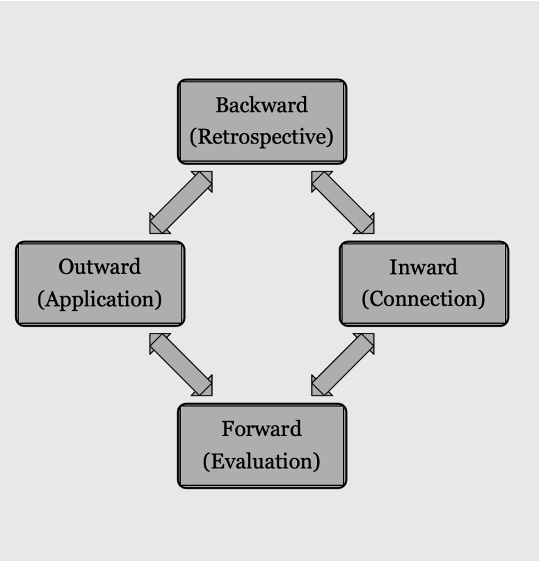
Figure 1. The 360-Degree Reflection Framework
Framing reflection as directional demonstrates that intellectual risk is neither singular nor static, but shifts depending on the reflective domain faculty inhabit. In doing so, it foregrounds faculty agency, demonstrating how failure can be leveraged differently depending on the reflective moment. This reframing responds to calls within failure scholarship to attend not only to whether risk is taken, but to when, how, and by whom it is taken. Rather than displacing TFT’s emphasis on transfer, the framework extends it by positioning reflection as the mechanism through which faculty reuse and revise prior knowledge and understandings in moments of failure, enabling intellectual risk-taking that is context-sensitive and professionally consequential.
Forward Reflection
It’s kinda crazy how memory works: the moments that exert the greatest influence later are often those tethered to failure, especially when they shape how we imagine what comes next.
As an undergraduate, one of my English professors unintentionally (or maybe intentionally) cultivated decades of self-doubt as a writer. He frequently questioned my decision to major in writing and, upon graduation, inscribed a book with the words, “To Kara: I never knew someone who wanted it more.” Those words—offered without praise or affirmation—have stayed with me, their ambiguity amplified by the book itself: Annie Dillard’s The Writing Life. I have often returned to that inscription, its unspoken doubt dangling loudly in what was left unsaid.
Ironically, despite his reluctance to encourage me as a writer, this same professor introduced me to two authors who would profoundly shape my writerly identity: Dillard and Joan Didion. I still remember sitting in a circle with other creative writing hopefuls as he opened The White Album. I devoured Didion’s work for its rawness and the way she wove the personal and the cultural together without resolving either. I was especially struck by her now-canonical line, “we tell ourselves stories in order to live,” and I remember wondering whether I could ever write with that kind of honesty and vulnerability and whether my words might ever matter in similar ways (would anyone quote me as I do her?). At the time, I did not yet name these questions (or these experiences) as encounters with failure. Instead, they registered as insecurities where my writing often did not match my own expectations or intentions, when I miscalculated audience awareness, and when I paired Mrs. Buck’s disapproval with this writing instructor’s lack of faith in me as a writer.
What mattered was not simply the doubt itself but what took seed: a distrust in myself as a writer. It took me many years to realize that the imposter syndrome and intense pressure to prove I belonged stemmed as much from my first-gen working class roots as from the instructors who undermined my abilities. Just as Didion did not write to soothe ambiguity but to give it shape, years later, I began to understand writing as a practice of not just guiding experiences but also helping to generate knowledge from them. These experiences have helped me understand that writing is inherently a risky practice, one that requires choosing to continue without assurances of success or even external validation (e.g. my almost 15-year journey to publish a theoretical argument about reflection). In many ways, this is what so many of us in academia—particularly in writing and rhetoric—are continually asked to do. We write within the chaos of unresolved emotions to name experience and try to make meaning from it. In Didion’s terms, we name things so that we can shape theoretical perspectives and reach toward the new or confusing or invalidating; we write our way through difficulty not because certainty is promised, but because the act itself gives it life and eventually direction to what might otherwise remain an unruly mess, too easily dismissed as failure.
Throughout my career, this particular undergrad experience is one I often share with students because it marked the beginning of purposeful choice — one that I’ve come to recognize as such through reflection. Naming the things that weigh us down, the failures that regularly go unspoken, offers opportunity for intellectual risk. For me, it required not only acknowledging doubt, but deciding how to act in response to it, which meant not giving up on writing and eventually earning a Ph.D. in a field that professor once suggested (over and over again) I was not good at. In doing so, I came to understand failure not as an endpoint, but as a condition of intellectual work.
Failure as Rhetorically Constructed
Like Didion, scholars in writing studies have long suggested that we tell stories not to resolve the mess, but to live within it. Failure scholarship in the field often echoes this by framing failure not only as a pedagogical tool or theoretical lens, but also as a rhetorical strategy for meaning-making within inconsistent or indifferent academic systems. In this work, failure is frequently positioned as a learning opportunity, one associated with eventual success or positive dispositional shifts (Brooke and Carr; Carr and Micciche; Feigenbaum; Corbett). At the same time, failure can function as a form of resistance. West-Puckett et al.’s queer validity inquiry (QVI), for example, offers faculty “permissioning… to resist notions of assessment that have been foisted upon us” by valuing failure, affect, identity, and materiality (29). Similarly, much of Kynard’s work—grounded in Black feminist traditions and critical race theory—examines how “failure” operates as a deliberate and ethical rhetorical stance against dominant academic expectations and deficit-based assessment models.
Yet, as this scholarship also makes clear, the meanings and consequences of failure are uneven. Definitions of failure often suggest possibility in or through it, or that to be effective in our work we must fail in some way (LaFrance and Corbett; Feigenbaum), as seen in Corbett’s edited collection on professional “failures” across academic discourse, graduate education, teaching, and the academic job market. At the same time, scholars such as D’Agostino, Silva et al., Tellez-Trujillo, and Johnson and Sheehan remind us that the capacity to fail safely is unevenly distributed. This uneven distribution complicates the work of reflection itself. If movement across the four reflective domains is shaped by differing levels of access, support, and institutional protection, then reflection cannot be understood as a neutral or universally available practice — its generative potential is itself unevenly distributed. This is precisely why intentional reflective practice matters: not as a remedy for systemic inequity, but as a means of helping faculty navigate conditions that reflection alone cannot fix. For some, failure invites growth; for others, it reinforces systemic harm.
When failure remains unnamed or unexamined, it often calcifies into self-doubt, professional caution, or disengagement. Faculty may avoid future risks not because they lack the desire or commitment, but because prior failures remain unresolved and affectively charged. Without structured reflective practices, failure can limit rather than expand intellectual possibility.
Inward Reflection
I’ve spent my whole life running/secretly running towards happiness so afraid I would never find it. Yet here I sit lost inside of my own self-inflicted torment … if you look at me, really look at me, what do you see? I feel embarrassed by the fact that I feel the way that I do. How could I, Kara Taczak, feel this way? I am intelligent. I am beautiful. I am loved. (Taczak, unpublished journal entry, June 2007) [7]
I felt like he [a mentor, a supposed friend] was saying I’ll never succeed because I have the ideas but can’t put them into “correct language.” What the fuck does “correct” language even mean?? He says I need to change to fit within the academy. I am resisting, but what am I resisting? I feel let down and used and wonder if he’s right. Am I not smart enough to be in this field? Do I need to change to fit in? (Taczak, unpublished journal entry, October 2007)
I deserved a higher raise; I was worth a higher raise. But according to him, “there are cheaper places to live than the Front Range” not because he wanted to lose me as an instructor, but because my labor was replaceable. I am fucking replaceable. (Taczak, unpublished journal entry, September 2015)
What is my other skill set? (Taczak, unpublished journal entry, March 2018)
I am not entirely sure I’m happy, and because of this, I have absolutely no motivation to do work. (Taczak, unpublished journal entry, July 2020)
Confessions of a Non-Tenure Track Scholar: It has been one year and eight days since I’ve felt productive in my writing. (Taczak, unpublished journal entry, August 2020)
I have always believed if you work hard then you might be rewarded, but I have learned that’s not true. Working hard doesn’t get you to move forward, and it doesn’t even necessarily help students want/get to learn more. Heck, working hard doesn’t even always get recognized. The worker bee is just a worker bee working non-stop for the fucking queen … and I don’t ever get to be the queen. I feel like I’m at a crossroads — I’ve wanted to be in this profession my entire life, but if I’m being honest, I’m not happy. And nothing I’ve tried to get out of this situation or change it is working. I don’t even write any more, and I love writing. I have loved writing since I wrote an essay when I was 10 and won the firefighter contest for what to do if you catch on fire. But I haven’t truly written in 2–3 years. And that just makes me more sad. (Taczak, unpublished journal entry, February 2021)
I have always believed to become a better educator; I need to be honest and upfront even with myself … perhaps the most with myself. I think this should be true for anyone who wants to be a good and effective educator, it’s why I wonder about publishing more articles on failure or classes that don’t work (or when students do something harmful to us) … We do need to learn from those moments as much as we need to learn from the good and the great moments, the moments where students also learn and move effectively/productively forward… I need space to find the light to be hopeful within myself again and also for the students. I’m hoping with summer and some self-care and some self-reflection, I can find a way out. Right now, I’m just not sure what it looks like. (Taczak, unpublished teaching reflection, July 2021)
This year—it was kinda shitty. (Taczak, unpublished journal entry, November 2022)
I don’t know what the next year holds, but as [Mark] Manson also says, “we all must have faith in something. We must find value somewhere … it’s how we find hope” (p. 109). I have faith in my ability to be a reflective practitioner so that I am constantly learning from the goods, bads, and everything in between. So, in a year’s time, when I come back to reflect upon things, I hope I’ve grown more and learned more about myself as a teacher – about my abilities to be an effective educator and give students something meaningful to move forward with. (Taczak, unpublished teaching reflection, April 2023)
When Failure leads to Intellectual Risk
Taken together, these journal entries present a pattern that is both recognizable and revealing. They document moments of self-doubt, exhaustion, stalled productivity, and identity questioning: experiences that are often narrated privately and swallowed silently as faculty. Across time, the entries show repeated attempts to name failure: questioning competence, motivation, legitimacy, and purpose. What they do not yet show is deliberation about future action. Instead, they capture the affective and identity-based risks faculty take when they allow themselves to articulate failure without resolution. In this sense, the risk present in these entries is not yet intellectual in that deliberative sense, but rawer and more emotional, almost existential; the risk of seeing oneself clearly and speaking that truth aloud.
This distinction matters. Without intentional and deliberate reflection, naming failure can stall in the revealing rather than attempt any kind of movement, leaving faculty aware of disruption but unsure how to act in response to it. It is at this juncture that Teagarden et al.’s work helps clarify what is—and is not—at stake. In their chapter, “Counterpoint: Why Not Intellectual Risk?”, they ask, “what is the point of failure?” (47), ultimately arguing that “intellectual risk-taking … has the greatest potential to help student writers weigh multiple options, reconsider dominant ideals of ‘success,’ and engage with others in deliberation that will help them learn” (49). Like risk management more broadly, intellectual risk involves a willingness to engage in learning behaviors that may lead to mistakes but also (and importantly) to discovery among growth and innovation. In this way, intellectual risk encourages the exploration of unfamiliar ideas, the challenging of inherited assumptions, and the reworking of knowledge under conditions of uncertainty. As Didion reminds us, reaching beyond what is known or comfortable especially in writing requires embracing what feels truer and riskier: “I write entirely to find out what I’m thinking, what I’m looking at, what I see and what it means. What I want and what I fear” (Why I Write). For both students and faculty, then, intellectual risk is not simply about knowledge production; it also creates space for self-examination and questioning, creative collaboration, and intellectual struggle (Feigenbaum).
Others have traced the potential of intellectual risk across writing contexts: in classrooms (Commer et al.), in academic genres (Canagarajah and Lee), and in the research process itself (Thesen and Cooper). Johnson and Sheehan further remind us that risk is never neutral; it is influenced by internal dispositions and external pressures. These insights are equally relevant for faculty, whose willingness to take intellectual risks in pedagogy, research, or service is often constrained by institutional cultures of performance coupled with disciplinary expectations and our own deep-seated beliefs about success. For faculty, intellectual risk offers a pathway for engaging ideas and practices that challenge historical baggage. It requires a willingness to lean into discomfort, a willingness to accept mistakes and reconsider dominant norms, and a desire to pursue deeper understandings. As Teagarden et al. emphasize, intellectual risk is not recklessness but an embrace of uncertainty as a productive and necessary space. In faculty contexts, this may involve what Bass describes as “disrupting ourselves” by “moving from the margins to the center” as a process that unsettles ingrained habits and assumptions. In this sense, intellectual risk not only invites different choices; it compels transformation, even when the path forward is unclear.
I have argued elsewhere that effective teaching in the twenty-first century requires a commitment to “renewing our practices” (Taczak and Karas 31), which not surprisingly came a couple years after one of the above journal entries. Such renewal is often disruptive, precisely because it is not a “safe space”; it is unscripted, messy, and invites self-criticism (35). Yet it also positions educators as learners whose capacity to grow depends on trying, revising, and adapting. Computer scientist Leslie Valiant describes this capacity as “educability”: a defining feature of human learning. For faculty, educability enables the reuse and revision of accumulated knowledge through reflection, allowing adaptation to new and tentative situations.
What these journal entries ultimately reveal is not a failure of will or commitment, but a gap—the space between recognizing failure and knowing how to move through it. That gap is where intellectual risk either stalls or becomes possible. Bridging it requires more than time or reflection alone; it requires reflection that is structured, directional, and purposefully oriented toward action. The sections that follow demonstrate how 360-degree reflection creates that bridge, showing how faculty can move from naming failure to leveraging it as a condition for intellectual risk-taking that reshapes practice, identity, and professional judgment.
Leaning into Failure: Reflection as Intervention
So when I’m thinking about process, and I’m thinking about what it’s taken to get to this moment, to be able to create this argument, and I’m looking back over the almost 15 years of work on this piece, I am kind of struck by how some of what I’m arguing now was already there. It just wasn’t fully formed. When I first started trying to write it, I think part of it was I didn’t have enough lived experience, and I definitely didn’t have enough theoretical grounding to say what I really wanted to say. And honestly, most important, I hadn’t reflected on the lived experience that I had already gone through. I hadn’t really put into practice what it was I was trying to argue for. So in that moment, in that opening moment when I was creating this argument, for me, reflection was really structured. I defined it as deliberate, intentional, systematic meant to help students try and figure out what they didn’t yet know as a way to prepare them to write effectively in new rhetorical situations, new writing situations.
The focus, as you can see, was on clarity and growth and forward movement on the idea that they would be successful. I think what has come from all of this living, all of this understanding about what I have lived through by reflecting on it, is that learning often begins somewhere much less stable. It emerges in those moments of in between and the experiences that don’t necessarily resolve easily or sometimes at all. So when I’m looking backwards, over the last 15 years, my theorizing has shifted. For one, it’s no longer just student centered. It now accounts for faculty experience.And in this article, I’m arguing that reflective practice creates conditions for faculty to lean into failure. Not to try and fix it quickly or even to just breeze on by it, but to stay with it long enough to understand what it could do for us and what it might be teaching us. Because yes, I do believe we can learn from failure. It may take a lot of time. I mean, I’m saying 15 years here, and really it started before then when I am thinking about the lived experiences that have led to some of what I’ve been able to say, and I think we can learn from the sometimes messy, painful, and even harmful moments, that accompanying failure, I see now that this is similar to what I was trying to do all those years ago. The difference is, for me, time has made visible what I couldn’t name. That intentional directional reflection is not simply a response to failure. It’s a way of living with it.
Of course, getting here has taken a lot of time, and I have drafted and revised endlessly. I mean, I have killed off more darlings than I could possibly count. I’ve walked away from the argument. I’ve come back to it, walked away, come back to it. I have leaned on generous friends and colleagues, some of whom I’m sure are sick of reading about reflection. And I think something interesting was the very first iterations of this article was called a Theory of Reflection, because I think in that moment, I wanted to prove something. I wanted to prove something to that 15-year-old self from Mrs. Buck’s class. I wanted to prove something to all of these faculty, professors who have doubted me, to the colleagues who doubted me and asked me to change. And even to Kathi, who as my mentor had already established herself as a reflection scholar, I wanted to prove that I was capable of making a serious theoretical contribution, but it was never quite right. It was never the right moment. It was never, my thinking was never in the right place. I didn’t have the right examples. Mostly because like I said, I hadn’t even allowed myself to reflect on those experiences. I hadn’t stayed with them. And ironically, I guess somewhat ironically, I’m now making this argument using those very experiences, and I think that’s what’s allowed me to get to this point.
So I’m pretty happy with where the theory is at now, not because I believe it’s finished, not because I believe it couldn’t use more tweaking or work, but because it’s truly an honest representation of how much I’ve worked to get it to this point. And it feels somewhat raw and vulnerable because some of what I share, and it reflects not just what I think about reflection, but really how I’ve learned to live inside of failure. And so I really offer this as an invitation for faculty to use this kind of reflection, to use this intentional, deliberate reflection as a way to lean into failure instead of trying to just push past it.
Ultimately, reflective practice creates the conditions for faculty to lean into failure “not necessarily to overcome it, though this is certainly one possible outcome, but to pay it the time and attention” required to understand it more fully (Taczak and Mitchell). Yet sitting with failure alone does not always produce change. My argument hinges on 360-degree reflection as an intervention: one that offers a structured type of practice mediating how faculty move from experiencing failure to acting within (and sometimes through) it. In this account, failure, reflection, and intellectual risk operate together rather than parallel concepts. Without intervention, failure often remains affectively dense and professionally restraining; with intentional reflection, failure can become interpretable and actionable. Reflection intervenes by organizing attention and guiding faculty to examine prior knowledge, surface assumptions molded by historical baggage, and identify where resistance constrains future action. This framework invites faculty to engage failure—discomfort, uncertainty, and all—not as something to be endured or resolved, but as a condition that reflection can make workable, even when it remains unresolved. It builds on the premise that reflection is not merely backward- or forward-looking, but directional, moving backward, inward, forward, and outward as a means of mediating how faculty interpret and respond to failure and the type of action it requires (if any at all).
Motivated by action—whether written, social, or creative—the framework foregrounds intellectual risk as central to reflective decision-making. It assumes a degree of vulnerability, particularly inward-facing vulnerability, consistent with what Butler (and, in turn, Khoury, Behm, and Rankins-Robertson) describe as necessary for processing, exposing, and pushing back against limiting norms. In this sense, reflection operates as a practice of re/framing: enabling new responses to challenge without requiring failure to be redeemed, erased, or resolved (Nohria and McBane).
360-Degree Reflection: Objectives
Building on the work done with the reflection artifacts in the previous sections, I now shift to a more explicit articulation of the 360-degree reflection framework by highlighting its four objectives and reflective domains (see Table 1). As the TFT research demonstrates, the 360-degree framework is intentionally adaptable: both the objectives and the questions guiding reflection can be modified to fit particular contexts, situations, experiences, and professional goals.
The framework supports faculty in:
- Taking intellectual risks by questioning norms, experimenting with pedagogies, and/or challenging institutional constraints recognizing that risk varies.
- Learning through failure rather than erasing, redeeming, or bypassing it.
- Naming the unknown and engaging discomfort as a necessary but not sufficient step toward reflective insight and change.
- Moving back-and-forth across reflective domains, understanding that different orientations afford different forms of risk and possibility.
| 360-Degree Reflective Model | Components | Questions | Application |
|---|---|---|---|
| Backward | RETROSPECTIVE: Recall a prior experience with failure. |
| Journal about a prior failure in which you became entrenched or stalled. Reflect on how this experience continues to influence present decisions or hesitations. |
| Purpose: To examine how historical baggage, institutional pressures, and internal conflicts shape present interpretations of failure. This domain foregrounds the forensic strand, as faculty revisit prior experiences to surface assumptions and consider how long-held beliefs (their own or others’) have shaped current risks and constraints. | Example of written reflection | ||
| Inward | CONNECTION: Reframe or revise current understandings about failure. |
| Write briefly about the “glows and grows” (highs/lows) of current teaching or scholarly work, attending to emotional affect rather than resolution. |
| Purpose: To center affect, acknowledging failure as both intellectual and emotional. This domain emphasizes the epideictic strand, as faculty interrogate fear, shame, defensiveness, or resistance and examine how these responses shape identity, belonging, and willingness to take a risk. | Example of a written reflection | ||
| Forward | EVALUATION: Relocate the understandings or learning. |
| Talk with a colleague or mentor to deliberately plan next steps following a rejected manuscript or stalled project. |
| Purpose: To frame failure and intellectual risk as future oriented. This domain foregrounds the deliberative strand, as faculty move from “what happened” to “what now?” and consider possible actions without certainty of outcome. | Example of a social reflection | ||
| Outward | APPLICATION: Situate reflection in community and context. |
| Design a workshop or presentation that shares a pedagogical or scholarly revision prompted by failure, explicitly acknowledging uncertainty and adaptation. |
| Purpose: To explore how systems, relationships, and institutional expectations shape responses to failure. This domain involves public and relational risk, as faculty test ideas, share revised practices, or challenge norms beyond private reflection. | Example of sharing work with others in an informal or formal presentation |
Importantly, this intervention does not eliminate discomfort or guarantee success. Instead, it repositions failure as an introspective site, where intellectual risk can be taken with awareness of stakes and consequences. By naming what is unknown or even disrupted, this type of reflective practice alters the conditions under which decisions are made. In doing so, it cultivates agency not by minimizing failure, but by re/framing it as a condition for intentional intellectual risk and informed professional judgment.
Because this form of reflection requires action—through writing, dialogue, or other embodied practices—it positions reflection as a lived, responsive intervention rather than a static, internal exercise. In intervening on how faculty interpret failure, reflection shifts attention from passive awareness to intentional inquiry: examining what occurred, why it matters, and how it might inform future decisions in teaching, writing, or service.
Unlike most other reflective models, this framework is reiterative encouraging faculty to return to reflections. As noted earlier, some of the most consequential reflective labor occurs when faculty settle into failure by naming it aloud and/or engaging in social reflection that makes thought audible and actionable. Such moments create a sense of “doing” (Witkin), allowing faculty to hear their own reasoning, validate affective responses, and reclaim agency from the failure itself rather than leaving it lodged in the experience. Social reflection, like written reflection, functions as an intervention that reorients how intellectual risk is understood and navigated. This relational dimension of reflection suggests particular applicable for graduate students and early-career faculty, whose encounters with failure are often unaccompanied by structured support or community.
Practical Implementations for Faculty Development
Because the framework is purposefully flexible and adaptable, it can be used in both individual and collaborative faculty development contexts. On an individual level, faculty might engage the framework through journaling, voice memos, or informal self-assessments to make sense of lingering doubts with things such as a challenging semester, unsettling conversations with colleagues or superiors, manuscript rejection, or professional setback. In more structured settings—such as writing retreats, faculty learning communities, mentoring conversations, or professional development workshops—the framework supports collective reflection on shared challenges, including:
- Classroom moments where a pedagogical experiment fell flat;
- Failed grant proposals or unsuccessful promotion and tenure applications;
- Article or book rejections that prompt questions of scholarly identity;
- Conference presentations that did not meet expectations; or
- Stalled or abandoned research projects requiring reevaluation.
Across these contexts, it is always important to consider which types of reflection are shared, particularly in relation to institutional hierarchies and power dynamics among participants. To help mitigate these concerns when the framework is used in collaborative spaces, share-outs should remain optional and participant-controlled, allowing faculty to determine what—and how much—they disclose. In this way, reflective engagement can support collective learning without requiring vulnerability to be performed or exposing participants to unnecessary professional risk.
But… What Follows?
Years ago, I listened to Linda Adler-Kassner deliver a presentation at the Conference on College Composition and Communication about threshold concepts, and one idea has stayed with me ever since: learning happens when we become comfortable being uncomfortable. The more I learned about being a first-gen working class kid, the more I carried that concept like a badge of honor sharing with students and even using it to orient my own professional goals. It felt as though Linda was speaking directly to my fifteen-year-old self in Mrs. Buck’s classroom: incredibly determined, fueled by a persistent sense of I’ll show you. That determination influenced not only how I learned, but the questions that now drive my research. At its core, reflection teaches us to resee and reshape what came before while considering the impact of the now and thinking of what it means in the future, provided we remain open to vulnerability and possibility in our responses (see also Jackson).
Not too long ago, Carr asked a deceptively simple question: What follows failure? She reminds us that “following” can signal both action and time: what it means to trace failure’s path and what comes after it. Her answer resists resolution: “To stay with failure. What follows is unknown” (“Following,” emphasis in original). Staying with failure, however, does not require passivity. Accepting uncertainty does not mean abandoning interpretation or judgment. Rather, it invites us to acknowledge pain and disruption without diminishing them and, in doing so, to reclaim agency over how failure shapes our futures and the actions we take. This article has argued that intentional, directional reflection offers faculty a way to do precisely that. Reflection intervenes on failure not by resolving it but by offering it the attention it most often requires so that we may reposition uncertainty as a condition for intellectual risk.
Failure will happen.
But what follows failure?
Reflection.
So I want to conclude by naming what this work is ultimately asking of us, and that is intellectual risk.
Reflection as I’m arguing for does more than sustain faculty through moments of failure. It actively repositions failure, whether as a generative condition for learning, as a catalyst for change or resistance, or even as a site where intellectual risk can become possible. I’ve hoped to show you through my own lived experiences that when we stay with failure long enough to reflect on it, it can begin to shape the choices that we make in different spaces. So I really see this kind of reflection as not about resilience in the abstract or about fixing ourselves to better fit within these existing structures. I see it as more about paying sustained attention to those moments that unsettle us, and asking what they might reveal about our values, our practices, and our futures as instructors and scholars.
It’s really why I argue for reflection as an essential infrastructure for faculty development, because it mediates failure and supports professional growth in the midst of increasingly complex and shifting academic demands. And professional growth looks different for everybody, and we define that based on our own goals and intentions. So reflection is not about removing risk, but really about giving us a way to engage with it, but engaging with care and a sense of agency.
So really my hope for you that what eventually follows failure is reflection.
Thank you so much for following along and for engaging with me, and thank you for trusting me to share parts of my lived experience as a way to showcase what this reflective framework might look like in practice.
Notes
[1] Historical baggage is a concept co-developed by me and one of my research partners, originally for students based on how they integrate knowledge through metacognition and reflection.
[2] I use the term directional reflection to describe reflective movement across orientations—backward, inward, forward, and outward—rather than a linear progression toward improvement.
[3] I mention in my introductory voice memo that a specific goals with using them is to try and deepen the engagement between me, the writer, and you, the audience, by sharing an authentic representation of my thinking and writing processes at specific points throughout the article.
[4] Reflection has a rich and varied history in writing studies; there have been many more scholars to research reflection and writing such as Sharon Pianko, Peter Elbow, Pat Belanoff, Anne Beaufort, Jeff Sommers, Lennie Irvin, V. Jo Hsu, and Jaclyn Fiscus-Cannaday. Yancey also had an edited collection, A Rhetoric of Reflection. There is even a recent publication in Composition Forum by Antonio Byrd and Virginia M. Schwarz on the importance of dialogic reflection and early career faculty. This is, of course, not an exhaustive list. My focus here is more narrow since it builds from the TFT research to move transfer-based reflection into faculty contexts.
[5] It’s important to note that other scholars across the disciplines have theorized about directional reflection. One of the more famous models comes from mathematician, Graham Gibbs. The Gibbs model includes six stages of exploring experience: description, feelings, evaluation, analysis, conclusion, and action plan.
[6] From this research, three interlocking components have proven central to transfer: the use of shared rhetorical language or key terms; systematic, reiterative reflection through a 360-degree framework; and theory-building as a means for articulating how and why knowledge moves across contexts. In its original articulation, TFT demonstrated that transfer is most likely when these components are integrated and revisited over time rather than treated as discrete instructional strategies.
[7] I include dates to show the progression.
[8] The chart is based on a version from Taczak and Sponsler and modified for the purposes of this article.
Works Cited
Adler-Kassner, Linda. Threshold Concepts, Writing, and General Education. Conference on College Composition and Communication, March 2012, St. Louis, MO. Conference Presentation.
Amin, Sana, Muhammad, Shabana Ali, and Rahila Yasmeen. Evaluating the Impact of Faculty Development Programs at the Workplace by Using Reflective Critique Writing Technique. BMC Medical Education, vol. 25, no. 1, 10 Jan. 2025, article 43, https://doi.org/10.1186/s12909-025-06647-4.
Bass, Randy. Disrupting Ourselves: The Problem of Learning in Higher Education. Educause Review, 2012, pp. 22–33.
Beaufort, Anne. College Writing and Beyond: A New Framework for University Writing Instruction. Utah State University Press, 2007.
Belanoff, Pat. Silence: Hope, Fear, and Resistance. College Composition and Communication, vol. 52, no. 3, 2001, pp. 399–428.
Brooke, Collin Gifford, and Allison D. Carr. Failure Can Be an Important Part of Writing Development. Naming What We Know: Threshold Concepts of Writing Studies, edited by Linda Adler-Kassner and Elizabeth Wardle, Utah State University Press, 2015, pp. 62–64.
Butler, Judith. Rethinking Vulnerability and Resistance. Vulnerability in Resistance, edited by Judith Butler, Zeynep Gambetti, and Leticia Sabsay, Duke University Press, 2016, pp. 12– 27.
Byrd, Antonio, and Virginia M. Schwarz. Horizontal Mentorship and Dialogic Reflection: Methods for Supporting Early-Career Faculty Transitions to New English Programs. Composition Forum, vol. 57, Spring 2026, https://compositionforum.com/issue/57/supporting-early-career-faculty/.
Canagarajah, Suresh, and Ena Lee. Negotiating Alternative Discourses in Academic Writing and Publishing: Risks with Hybridity. Risk in Academic Writing: Postgraduate Students, Their Teachers and the Making of Knowledge, edited by Lucia Thesen and Linda Cooper, Multilingual Matters, 2013, pp. 59–99.
Carr, Allison D. Following Failure. Composition Forum, vol. 53, 2023, https://compositionforum.com/issue/53/following-failure.php.
———. Failure: A Dwelling. Corbett, pp. 247–253.
Carr, Allison D., and Laura R Micciche, editors. Failure Pedagogies: Learning and Unlearning What It Means to Fail. Peter Lang, 2020.
Carey, Tamika L. Necessary Adjustments: Black Women’s Rhetorical Impatience. Rhetoric Review, vol. 39, no. 3, 2020, pp. 269–286. https://doi.org/10.1080/07350198.2020.1764745.
Cedillo, Christina V. What Does It Mean to Move?: Race, Disability, and Critical Embodiment Pedagogy. Composition Forum, vol 39, Summer 2018, https://compositionforum.com/issue/39/to-move.php.
Commer, Carolyn, Ana Cooke, Justin Mando, and Alexis Teagarden. (Re)Locating the Rhetorical Commonplaces of Failure and Risk-Taking. Rhetoric Review, vol. 43, no. 1, 2024, pp. 78–94. https://doi.org/10.1080/07350198.2023.2286143.
Corbett, Steven J, editor. If at First You Don’t Succeed? Writing, Rhetoric, and the Question of Failure. The WAC Clearinghouse; University Press of Colorado, 2024.
D’Agostino, Mario A. Trust the Process: Dissertation Gatekeeping, Failure, and Graduate Student Writing. Corbett, pp. 215–221.
Didion, Joan. The White Album. Simon and Schuster, 1979.
Efu, Sandra Ifeatu. Reflection: A Means to Faculty Engagement in Meaningful Continuing Professional Development. Teacher Development, vol. 27, no. 2, 2023, pp. 234–255. https://doi.org/10.1080/13664530.2022.2159508.
Elbow, Peter. Writing without Teachers. Oxford University Press, 1973.
Feigenbaum, Paul. Welcome to ‘Failure Club’: Supporting Intrinsic Motivation, Sort of, in College Writing. Pedagogy, vol. 21, no. 3, 2023, pp. 403–426. https://doi.org/10.1215/15314200-9132039.
Fiscus-Cannaday, Jaclyn. Reflection-in-Motion: Reimagining Reflection in the Writing Classroom. Utah State University Press, 2025.
Gibbs, Graham. Learning by Doing: A Guide to Teaching and Learning Methods. Oxford University Press, 1988.
Hsu, V. Jo. Reflection As Relationality: Rhetorical Alliances and Teaching Alternative Rhetorics. College Composition and Communication, vol. 70, no. 2, 2018, pp. 142–68.
Irvin, L. Lennie. Reflection Between the Drafts. Peter Lang, 2020.
Jackson, Brian. Teaching Mindful Writers. Utah State University Press, 2020.
Johnson, Gavin P., and Ryan Sheehan. What Does It Mean to ‘Embody Failure’?” Corbett, pp. 127–146.
Kynard, Carmen. Writing while Black: The Colour Line, Black Discourses and Assessment in the Institutionalization of Writing Instruction. Urban Education, vol. 43, no. 5, 2008, pp. 522–544.
Kynard, Carmen. Race, Publishing & Rhetoric of Rejection. Education, Liberation & Black Radical Traditions, 13 Oct. 2012, http://carmenkynard.org/rhetoric-of-rejection/.
Khoury, Nicole, Nicolas Behm, and Sherry Rankins-Robertson. Building an Affective Infrastructure to Lead Writing Programs. Composition and Rhetoric in Contentious Times, edited by Rachel McCabe and Jennifer Juszkiewicz, Utah State University Press, 2023, pp. 90–106.
LaFrance, Michelle, and Steven J. Corbett. “Discourse Community Fail! Negotiating Choices in Success/Failure and Graduate-level Writing Development.” Graduate Writing Across the Disciplines: Identifying, Teaching, and Supporting, edited by Marilee Brooks-Gillies, Elena G. Garcia, Soo Hyon Kim, Katie Manthey, and Trixie G. Smith. The WAC Clearinghouse; University Press of Colorado, 2020, pp. 295–314. https://doi.org/10.37514/ATD-B.2020.0407.2.12.
Liu, Xiaoqing, Jincen Xiao, Zhao Xiuwen, and Siqi Li. From Reflection to Crafting: The Effects of Feedback-Seeking Motives in Peer Feedback Faculty Development Programs. Reflective Practice, vol. 26, no. 4, 2025, pp. 528–544. https://doi.org/10.1080/14623943.2025.2459436.
Maraj, Lou. Black or Right: Anti/Racist Campus Rhetorics. Utah State University Press, 2020.
Miller, Elizabeth Ellis, Cameron Mozafari, Justin Lohr, and Jessica Enoch. Thinking about Feeling: The Roles of Emotion in Reflective Writing. College Composition and Communication, vol. 74, no. 3, 2023, pp. 485–521.
Nohria, Rahul, and Sarah McBane. The Impact of Failure on Faculty Development. Currents in Pharmacy Teaching and Learning, vol. 14, no. 2, 2022, pp. 123–126.
Peppercorn, Susan. Use Failure as an Opportunity to Reflect on Your Strengths. Harvard Business Review, 18 July 2019, https://hbr.org/2019/07/use-failure-as-an-opportunity-to-reflect-on-your-strengths.
Pianko, Sharon. Reflection: A Critical Component of the Composing Process. College Composition and Communication, vol. 30, no. 3, Oct. 1979, pp. 275–278.
Reed, Betsy, Joan Didion, in her own words: 23 of the Best Quotes. The Guardian, 23 Dec. 2021, https://www.theguardian.com/books/2021/dec/23/joan-didion-in-her-own-words-23-of-the-best-quotes.
Schön, Donald A. The Reflective Practitioner. Basic Books, 1983.
Silva, Mary Lourdes, Josephine Walwema, and Suzie Null. Teaching to Fail? Three Female Faculty Narrative about the Racial and Gender Inequalities of SETS. Corbett, pp. 137–158.
Sommers, Jeff. Reflection Revisited: The Class Collage. Journal of Basic Writing, vol. 30, no. 1, 2011, pp. 99–129.
Taczak, Kara, and Liane Robertson. Metacognition and the Reflective Writing Practitioner: An Integrated Knowledge Approach. Contemporary Perspectives on Cognition and Writing, edited by Patricia Portanova, Michael Rifenburg, and Duane Roen, The WAC Clearinghouse; University Press of Colorado, 2018, pp. 211–229. https://doi.org/10.37514/PER-B.2017.0032.2.11.
Taczak, Kara, and Jennifer Karas. Disrupting the Margins: A Case for an Intentional Reflective Framework. Journal of Faculty Development, vol. 33, no. 2, 2019, pp. 31–36.
Taczak, Kara, and Debbie Gale Mitchell. Embracing the Ugly: Creating Generative Failure through Bullet Journaling. Failure Pedagogies: Learning and Unlearning What It Means to Fail, edited by Allison D. Carr and Laura M. Micciche, Peter Lang, 2020, pp. 201–222.
Taczak, Kara, and Laura Sponsler. A Reflective Framework for Faculty through SoTL: A 360-Degree Model for Reflection. Transformative Dialogues, vol. 18, no. 2, 2025, pp. 202–212. https://doi.org/10.59236/td2025vol18iss21885.
Teagarden, Alexis, Carolyn Commer, Ana Cooke, and Justin Mando. Intellectual Risk in the Writing Classroom: Navigating Tensions in Educational Values and Classroom Practice. Composition Studies, vol. 46, no. 2, 2018, pp. 116–36. https://www.jstor.org/stable/26642478.
Teagarden, Alexis, Justin Mando, and Carolyn Commer. Counterpoint: Why not Intellectual Risk? Corbett, pp. 47–64.
Tellez-Trujillo, Karen. Recognizing Feminist Resilience Rather Than Seeking Success in Response to Failure. Corbett, pp. 125–136.
Thesen, Lucia, and Linda Cooper, editors. Risk in Academic Writing: Postgraduate Students, Their Teachers and the Making of Knowledge. Multilingual Matters, 2013.
Valiant, Leslie. The Importance of Being Educable: A New Theory of Human Uniqueness. Princeton University Press, 2024.
West-Puckett, Stephanie, Nicole I. Caswell, and William P. Banks. Failing Sideways: Queer Possibilities for Writing Assessment. Utah State University Press, 2023.
Witkin, Georgia. The Power of Talking: Why Experts Advise to Talk about your Feelings. Psychology Today, 9 Aug. 2018, https://www.psychologytoday.com/us/blog/the-chronicles-of-infertility/201808/the-power-of-talking.
Yancey, Kathleen Blake, Liane Robertson, and Kara Taczak. Writing Across Contexts: Transfer, Composition, and Sites of Writing. Utah State University Press, 2014.
Yancey, Kathleen Blake, Matthew Davis, Liane Robertson, Kara Taczak, and Erin Workman. The Teaching for Transfer Curriculum: The Role of Concurrent Transfer and Inside- and Outside- School Contexts in Supporting Students’ Writing Development. College Composition and Communication, vol. 71, no. 2, 2019, pp. 268–295. https://doi.org/10.58680/ccc201930423.
Yancey, Kathleen Blake, Sonja Andrus, Matthew Davis, Sharon Mitchler, Liane Robertson, Kara Taczak, Howard Tinberg, and Tanner WouldGo. Readiness to Learn: Variations in How Students Engage with the Teaching for Transfer Curriculum. College Composition and Communication, vol. 75, no. 2, 2023, pp. 248–279. https://doi.org/10.58680/ccc2023752248.
Yancey, Kathleen Blake. Reflection in the Writing Classroom. Utah State University Press, 1998.
Outward Reflection: An Afterwards of Sorts
This final voice memo I’m calling “An Afterwards of Sorts.” In some ways, I’ve been sharing my writing publicly since I was about 10 years old, with varying degrees of buy-in and success. And since I was 23 and in the academy, much of that writing has been collaborative. And this is really because from the moment my mom and I started writing that duet-style poem back and forth, I was just completely hooked on writing with others. There’s something comforting about it. And honestly, sometimes it’s easier. Not all the time it’s easier, but sometimes easier. And that’s because the pressure to prove yourself shifts when you’re building ideas with people you trust and respect. And often, as is the case with me, people you’re friends with.
Over time, I’ve come to rely on that kind of intellectual community. The people I write with would never let me put something out into the world that only makes sense inside my own head. They push me, they question me, they challenge me, they help me get clearer. And just as importantly, it’s more fun. Writing for me has always been relational. I mentioned that in an earlier voice memo—so, when I was sitting down to return to this theory of reflection after a long time and on my own, I was a wee bit nervous. Okay, I was a lot bit nervous, but this is because the article has been a long time coming. I’ve been working on versions of it since 2012. And there have just been so many drafts. I even went back in to my hard drive and tried to count how many drafts, but then I got lost in, do I count half-starts and abandoned versions? Do I count random bibliographies that I don’t even remember why I had the pieces on there? And so I just stopped counting.
But even in the last year and a half, two years that I’ve been trying to write this and re-envision it for Composition Forum, I have rewritten like multiple sections many times, including the introduction. I mean, I’m sure I’ve driven the editors crazy because I will just completely restart the introduction. And… I’ve also asked friends and colleagues to read and reread it to help me think through what I was trying to say and if I did in fact say what I meant to say in a way that was understandable. And still, even after all this time, even after the reflecting that I have done, there are moments where the old certainty Uncertainty rears its ugly head. And I start thinking and questioning, does my argument hold? Will this matter? Will an audience actually take it up? And I know this voice is familiar and it’s tied to the very experiences I write about in this article. But now what’s different is how I respond to it.
So for me, part of that is sharing the drafts with other people, getting their feedback, sitting on their feedback, reflecting on their feedback, going back to them with questions and then re-imagining what it looks like with this feedback. This has become a form of reflection for me, an intentional type of reflection. And I think of it as a social reflection because it not only helps me to… re-imagine parts of my article, it helps me push back on those earlier narratives and reposition them. It doesn’t erase them. It doesn’t discount them. And I’m not trying to discount or erase them because they are part of my past that have helped me get to this point, but I am not letting them have a final say. They do not get to have the final say. I think this is probably why I care so much about this article because for me, it stands as proof that this kind of reflection, messy, iterative, a lot of times uncomfortable, it does something. It creates movement. It makes space for rethinking and… it reminds me that the failures of the past and the yesterdays, they don’t get to dictate who I am and where I go next or what I do next.
This, of course, does not mean the process is clean or easy or complete because it is definitely not. And I don’t think that that’s the perfect purpose of the type of reflection I’m arguing for. I’m still revisiting, still reworking. I’m still learning how to sit with the experiences and the feelings that feel unresolved. Which is really why I argue that this reflection has to be, this reflective practice has to be reiterative. A returning to earlier moments, earlier reflections, so they can be reconsidered in light of who we are right now. So what I’ve shared feels risky. Honestly, it feels really fucking scary. And I have definitely questioned whether or not I should share it. And it It feels very exposing, writing so openly about failure and uncertainty and using my own experiences as artifacts. It just feels exposing and I can’t control how people respond to it. I can’t control if they’re going to do what I hope and attempt it, take up my words and try it for themselves.
But I do importantly feel that it’s necessary to share. If reflection is going to do the kind of work, if reflective practice is going to do the kind of work I’m asking it to do, then it has to make room for a little discomfort. And so here we are, the draft is as finished as it’s going to get and you have now engaged with it at least on some level. One last little thing: while Composition Forum does not require a statement about generative AI use, I did want to be transparent about mine. Throughout the drafting and preparing of this manuscript, I used generative AI tools, specifically Grammarly and ChatGPT-5, to support early stage idea generation and language refinements. Afterwards, I reviewed and revised and edited all the content and I take full responsibility for the accuracy and originality of the published article. Thank you for following along.